
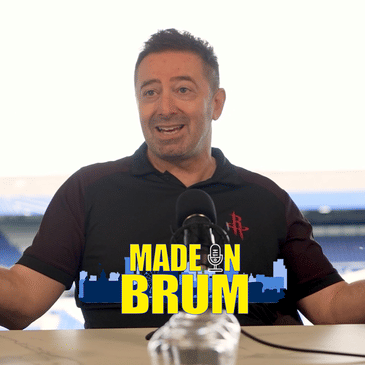
Basketball in Birmingham once had a real buzz — so what happened? In this episode of Made in Brum, Rob Palmer joins us to talk about the rise of Birmingham Rockets, building opportunities for young people through sport, and why basketball deserves a bigger place in the city again. Rob discusses: * Growing a community basketball movement across Birmingham * Delivering programmes for 1,200+ weekly participants * Using coaching, mentoring and sport to change lives * Accessibility and opportunities within basketball * Sponsorship, marketing and growing the game locally * Bringing basketball back into the spotlight in Birmingham * Working alongside NBA legend Hakeem “The Dream” Olajuwon * International basketball camps and elite player development We also explore the impact of Hakeem Olajuwon — one of the greatest basketball players of all time — and what Birmingham can learn from global basketball culture. If you care about youth sport, community projects, Birmingham culture or basketball’s future in the UK, this episode is for you.
Sponsored by Certified Pro Installs - providing certified electrical, fire protection and compliance solutions for businesses across the UK and Ireland, delivering professional installations, maintenance and safety services with directly employed engineers.
[00:00:00] In the NBA draft in 1984, I think it was, Michael Jordan was third or fourth in the draft. The guy that was the number one draft pick was a guy called Hakeem Olajuwon, Nigerian guy, played football back in Nigeria and then I think he was a sports teacher and said, look, you should probably try basketball. And a year later, he was on a plane to Houston and played his whole career in Houston. So an NBA, one of the NBA greats he was known as.
[00:00:30] Anyway, this guy said, oh, there's a guy who wants to speak to you, Hakeem Olajuwon. I obviously didn't really believe him at the time, left it a couple of days and then we contacted him and sure enough, it was this guy, his daughter had come to university in Birmingham to do a business degree and I'd love to see what you've got going on. I was looking at setting some basketball stuff up while I was here.
[00:00:56] We kind of embraced the day, whereas I think York's just struggled a little bit. It was the opposite. We put them out of sync right from the start. They led once after the first shot of the game, but they didn't lead again and we were really dominant all the way through. So it was a really strong performance. I was absolutely shocked at how excited the kids were to meet in a professional sportsman, but they wouldn't know.
[00:01:22] I could have taken somebody, put me in a tracksuit and tied me with anybody. It didn't matter to the kids. They were so excited. And if the players engage in, and you give a few free tickets away and bring your parents and they come on a Saturday night or Sunday afternoon then, and the player then engages them on a match night or acknowledges them, that can bring the world to the kids. And like you said, it is they do treat me as heroes. That's a hero story, couldn't they?
[00:01:46] You know, and I guess, you know, I know the players, I've known a lot of the players since they were youngsters and our import players, obviously I have a daily relationship with them. So I know they're just human beings and just normal guys, but to the kids and the fans, it's... Superheroes. Yeah, and I think we've got to do more of that. Before we get into this, we're doing over a million engagements a month, but most of you aren't subscribed.
[00:02:12] If you enjoy the content, hit subscribe and follow us on socials. It'll make such a massive difference. Cheers. Good morning. Morning. Nice to be here. Yeah, man. Thank you for the invite. You are very welcome. West Brom fan, as you've said, so tears beyond the smog. Yes, for far too long since I was a nipper really. Since I think 77 was my first game. Oh, I chose my age a little bit, didn't it? Cyril and Laurie Cunningham.
[00:02:43] Yeah. Norwich at home was the first game that I ever went to. Two all draw and then my dad took me two. And then incidentally, or coincidentally, I suppose, in 2012, the last game I went to him with dad was against Norwich. Yeah. Yeah, and he passed away a couple of months later. Yeah. So it was a full circle. Oh, yeah, for that game. No, we lost one now. Oh. We lost one now. Couldn't even do a favour.
[00:03:07] No, absolutely. No, you knew he wasn't well because we always stayed to the end, but it was like 10 minutes to go. He was shivering, but that's another story. He's kind of like, he wasn't well. It's a nice circle though, isn't it? Yeah, it's a nice circle. We always look out for Norwich at home, but I don't be beating them since. I should do away with you. I should do away with you. Looking for good luck omens or omens of any kind, I think. So, anyway.
[00:03:33] So, yeah, can we get a bit of an introduction as to your role and you as yourself? Yeah, absolutely. So, let's start with this really. I did 12 years of banking, believe it or not, and didn't enjoy any minute of it really at the time. But I played football as a kid. I kind of got into basketball from around 12, 13.
[00:04:00] Started doing some coaching when I was maybe 16, 17. I set my own club up down in the Northfield area with a bunch of mates that we had nowhere to play really. And getting into a club with probably older men at that stage. We felt ancient, but we were probably very young really. Yeah. So, we just ended up setting me on club. And I don't know, that was probably my, maybe I kind of got the, I probably just learned a little bit about trying to get organized.
[00:04:29] If it's not there for you, you go and do it yourself. And I started doing a little bit of coaching on the side with Auburn and Bullets. Had a bit of success with that. And then, actually, another guy that works, he works at the Blues now, a guy called Paul Virgo. Paul, he's in the community team here. He was lecturing at North Birmingham College at the time. And I've known him on the basketball circuit. And we'd gone over, this was, it's been 99.
[00:04:59] We'd gone over to see a mate who was working on cruise ships from Miami around the Caribbean. And Paul was doing the football, some football camps in LA. So, I just flew over there and we met up. And we did a week on this cruise and then back to Miami for a week, which was great. But he told me he was looking for a, touring a golf academy at North Birmingham College. He said, but we can't have sign-ups. Which didn't surprise me, really.
[00:05:27] You know, you're kind of in the inner city and maybe golf maybe isn't a prominent sport for young people. And I'd say to him at the time, look, if that don't work and you've had to do the basketball one, let me know. And he rang me about two weeks later and said, we're knocking the golf on the head. Could you get me five or six students? And we'll give you 12 hours a week. And that's what I did. I got some kids that I was working with anyway. I got a relationship and they were looking for somewhere to go to college and did there.
[00:05:55] And I jumped from there and started there and did some coaching. I got some, a little bit of work at Birmingham Uni. Some stuff there. I picked up little pockets of schools coaching. Kind of turned that into a job. And my dad at the time, he'd said that he was old school. He was like, well, you've got a job for life in the bank and all. And as long as, well, in the end, he said to me, as long as your mother's checks on the table at the end of the month, he said, I'll support you.
[00:06:25] And that was it really. So jumped into that from there. Got involved a little bit more on the strategic development side for the job with the council. We saw in 2000, 2001. And the club then was really initiated by some funding from Sport England. Yeah. The Birmingham Bullets had just kind of tailed off and gone into liquidation. So there wasn't much for kids going on.
[00:06:49] And a little project formed, Active Sports, it was called at the time, just to kind of put some recreational basketball sessions on around the city. So we did one over in Kings East, one in Answorth. The Sports Centre at Neutral's up the road had just been built. I think there was one at King Edward's Aston School. There were about six of these sites around the city. And I kind of started that off and I was a bit surprised already because there was probably 25, 30 kids at each site.
[00:07:17] All the old first and second year, year seven and eight, I think it was at the time. And brought them all together, the better kids together on a Saturday morning at Neutral's. We suddenly got like 60, 70 kids from nowhere. So I thought, well, maybe these better kids need to be competing or have an outlet for competition. So I entered the team into the National Leagues. And that was really the formation of the club. Year on year, it grew.
[00:07:43] We were getting 140 kids, I think, for a tryout a couple of months later in the June. And it's like, oh, actually, I need to probably put something together in there. Why? And that really was the start. I think it was City of Birmingham Active Sports was our first year because it was funded by them. And then we took the Active Sports tag off. Year on year, we were getting more kids through the doors.
[00:08:08] I think maybe seven or eight years later, we got a pathway from under 13s to under 18s. A couple of teams at each age groups. And probably dealing with maybe 150 kids. Was there just no one from Birmingham competing at a decent level at that time once the Bullets had gone? Not to begin with, no. There were a couple of little pockets of teams, clubs that were running. They were doing some quite nice stuff, but a little bit more maybe niche and smaller.
[00:08:36] It was Birmingham A's, I think, because they started at the time. So we had some good competition with them. But they didn't run maybe quite as many teams as us. A little bit smaller. So it was kind of like, it was nice because you saw, I suppose, there was a market for it. There was a need. There was kids wanting to do it. And then we experimented a little bit with, again, with satellite hubs and centres. I'm trying to move that around a little bit with mixed success.
[00:09:06] But the sports centre, it's more a basketball centre than each other. And everybody wanted to gravitate towards there, really. But the nicety of that was that you ended up with kids from Northfield, Solio, Hansworth, Aston-Lazelles, Jamsley Wood, all coming together. And then set of lies. Yeah, and it ended up, I mean, again, one of the best things for me with it all is that you kind of, I suppose, the transition, the social movement or the social economic movement,
[00:09:36] where you're getting kids from more salubrious areas that are mixing with kids from not so. Kids wouldn't normally. No, I think sport helps to do that. It's probably one of the only vehicles that can successfully do that and bring communities together. So it's kind of the diversity of what we've got. Well, if I fast forward now 15 years, the diversity of what we've got still reflects the city, which is probably the thing I'm most proud of, really, in terms of that.
[00:10:03] It has its challenges at times and finding financial models that work to continue in existence. But from that kind of thing, aspirationally now the kids have got a pathway that they can either come just because they want to blow off a bit of steam and they like the sport and find out what it's about, but there's also the opportunity to go to the highest levels throughout our pathway. So we've got teams. How hard was that to scale from opening a club to where you are now?
[00:10:32] We've kind of gone, yeah, not easy. I've gone backwards and forwards a little bit. So we're probably, we're working on volunteer staff to begin with and to create the culture across an organisation as you grow is quite challenging because otherwise there were times where I felt, you know, we've got, we've maybe got eight teams, but it's like eight clubs within a club because each coach is doing their own thing. There's not a lot of consistencies, not just on the court in terms of,
[00:11:00] you know, principles of play, but you've also got the off-court culture and stuff as well. So that's been a little bit of a challenge. We kind of, we got to a point where I think maybe five or six years ago when the junior programme felt too big. So from a performance level, let's go back down a little bit and said, right, these are our principles. So I want to see it on the court, but we also want to get it right off the court as well. That's getting like a framework then that they've got to... Exactly that, yeah. So, you know, otherwise, again, without getting too technical,
[00:11:30] if you've got one team playing one way and another team playing another way and you want to move a kid through the pathways, it's completely confusing them really, absolutely. And the coach development comes really relevant within that as well. So the scaling up in terms of the numbers hasn't been too challenging, not on the boys' side anyway, but getting a consistency of delivery has always been a challenge. And I think we'll always remain a challenge. You know, we deal with a mixture of volunteer,
[00:12:00] part-time and full-time coaches and staff. So you've always got challenges there on what people commit to, what's a priority for them. But ultimately, the kids and their parents are still our customers. So when they're coming through the doors, all they're interested in is that their kids get in the best experience and the best deal, really. So, yeah, not an easy one and does take a lot of work to get that right. But I think, you know,
[00:12:27] I'm confident we're kind of moving in a good direction with that now. Is it similar to football where you would be kind of a feeder club as well that people would come in and then say, oh, you get scouts at the game? Yeah, not so many scouts. The structure of the sport in this country is, I don't think is where it needs to be, if I'm being totally honest. If you go across Europe, you'll see some of it's integrated like football clubs and basketball clubs and volleyball clubs are integrated as one.
[00:12:57] But the sport's really much more popular across Spain, Greece, Italy, Portugal. And the States, obviously. Yeah, the States, obviously. But our structure here is not particularly good. So there is a little local league now that got across the West Midlands for kids. The coaching badges, I think, in my opinion, are too easy to get. Yeah. So you can get a level one coaching qualification really in, probably in,
[00:13:26] I don't know if they just changed it recently. For many years, it was like a couple of weekends. And you can do that. And off you go as a level one. Level two maybe was probably four or five sessions to attend and be assessed upon. But if you compare that to what you're looking at across Europe especially, you'll be in training for a year to two years before they'd let you loose on a bunch of Andrites. So they're much, much stricter in there and the technicalities of it. So because of that, again,
[00:13:56] the youngsters aren't probably getting some of the foundational, top-level stuff that they really need to move on to the next level. So I think there's an area there as a sport that needs to be addressed. You know, from a pathway point of view, obviously we are the biggest club in the area now and we're playing at, I think in Birmingham, we're the only club that are playing in the premier national leagues. So you've got under 14, 16 to 18s, boys and girls.
[00:14:26] Under 12s are a little bit more regionalised. And then each league has also got a regional conference league. So there's a number of clubs in Birmingham now that play in the conference competition. And we have a team of our own in those leagues. But then the premier leagues, which we're in, which is, again, for a pathway point of view, most of the stronger kids will then gravitate because they want to play at the best level. What we need to do is make sure that our coaching levels and infrastructure matches that as well. And again, not always the easiest.
[00:14:56] So the continuous professional development of the staff is something that has to be a priority really for us. Yeah. So tell us about the inaugural BCB trophy. Well, so before I get to that, I'll give you a little bit on the pathway maybe of how we arrived there. It might be an interesting one for you. So for probably, did we get to, probably about 12 years, we were purely juniors.
[00:15:26] And then we were losing a lot of kids at 16 that wanted to golf and play at a better level around the country. So we've had several high-level athletes that have come through. Myles Heston was a great bar school kid that started on our active sports programme and then went on to become the great Britain captain. So he's played around the world. So we've had a number of kids that have come through but then left us at 16 because we couldn't fulfil their ambitions. So the thought process was,
[00:15:54] how do we retain kids in Melbourne if they want to or they need to be here? And then what's the outlet at the top end? So the first motive really in putting a men's team together was to give the kids an experience so we played in the fourth division and it would be majority of a bunch of 16, 17-year-olds just to get them into the adult game. Yeah. And a bit more physical and competitive, smart players.
[00:16:23] And then we set an academy up. So first of all, did some work over at Solid Hall 6 Form and we put an academy in place there where the kids do maybe 10 hours a week of basketball alongside their academic studies. We've managed to evolve that now. So now we've got an academy over at B-Math Sutton which is probably our elite academy. We've got 62 kids there I think at the moment. They're doing up to 19 hours a week and then they're playing the top level of,
[00:16:52] well, the top team playing the top level of Wednesday afternoon basketball across the country and it's called the EABL. And we've got kids that are doing a diploma in sports alongside their academic studies there. So there's some high-level athletes there. But just before COVID, we got to the third division. I was still coaching then as it was my last year of coaching. And we managed to get promoted up to the second. But COVID was the best thing that happened to us
[00:17:21] because it was a bit of a chance. I've kind of gone from running the club voluntarily to running it on my own to having a little bit of support. But you're having so much time and you're kind of heading the day-to-day stuff. So then everyone furloughed up then wanting to... Yeah, because you're trying to run what's on the court all the time, but then you lose sight of the infrastructure. We've got stuff in schools going on. We've got a couple of community hubs that were running. We'd started the academies.
[00:17:50] But finding a financial model that actually worked was never anything I even thought about. And during COVID, I'd got a little bit, a couple of board members that I put together. But it was a time to stand back and say, actually, where do we want this club to be? Yeah, realistic now because we've got... You're doing day-to-day. You're just kind of, oh, what's going on tomorrow? What's going on tomorrow? And you're not looking at the bigger picture. Totally. And it was too big really for me to be carrying on coaching. It's like, well... Swimming in it at that point. Yeah, absolutely. But swimming backwards really or sinking and you're kind of thinking,
[00:18:20] well, I'm going to have more impact probably not by coaching one set of 12 kids, but by actually standing back and helping others grow and getting the right people in place. So what does an infrastructure look like? And then how do you work that into a commercial model as well? Really. So you've got, on the one hand, you've got your charitable objectives, but the other hand, you've got a business that needs to operate and run. So we'd already had a... There was a guy that had contacted me.
[00:18:49] This was a couple of years before COVID and he'd come through one of our volunteer coaches. A guy had gone into an immigration solicitors on the Stratford Road where one of our volunteer coaches' wives worked. And this guy said, I'm an American, Nigerian guy. I play basketball. I've just arrived in Birmingham. Now, in the NBA draft in 1984, I think it was,
[00:19:18] Michael Jordan was third or fourth in the draft. The guy that was the number one draft pick was a guy called Hakeem Olajuwon, Nigerian guy, played football back in Nigeria. And then I think he was a sports teacher and said, look, you should probably try basketball. And a year later, he was on the plane to Houston and played his whole career in Houston. So an NBA. One of the NBA greats he was known as. Anyway, this guy said, there's a guy who wants to speak to you. Hakeem Olajuwon.
[00:19:50] Obviously, didn't really believe him at the time. Left it a couple of days. And then we contacted him. And sure enough, it was this guy. His daughter would come to university in Birmingham. To do a business degree. And I'd love to see what you've got going on. I was looking at setting some basketball stuff up while I was here. I was very mad at him. And it was like, you know, oh, this is really good. And got five boys aged five to 11 at the time.
[00:20:19] Just into football, really. The one especially who was a big footballer. Never seen their dad play basketball. Never knew anything about his career. He said, look, come down on a, you know, come down on Thursday night and we'll show you what's going on. And he came down. Oh, this is really good. I thought, the boys would love this. And so, brought the boys on the Saturday morning. And that was it. He was hooked. This is like this big NBA star. He'd come and turn up with his kids they'd never picked a bullet before. Go on the sideline. They'd definitely got no idea who he was.
[00:20:48] And he's showing them kind of all this stuff. So, um... Did that just come from my phone calls? From a phone? Yeah, just from a phone call. It was really bizarre. So, he was living over in Solihull. Just arrived. And he became a director with myself and Kirk. There's three of us now, directors. Kirk Dawes. And so, he was here for three, four years. He still sits as a director with us now. Actually, he's back in Houston. These boys have grown and they're all at college and on their own careers, really.
[00:21:19] But, on the back of that, he was the guy that said, what do you want to do? We said, well, we would love to have our own academy here so the kids don't have to go away. And so, we put his name to the Solihull Academy. That was a starting point. And we'd love to run an international summer camp. We've got a lot of our kids that will go around, even overseas, to camps in the summer. And so, we put this week-long camp in, putting each other, and just used some accommodation from Aston Uni. We had about 90 kids in for the first camp.
[00:21:49] But he'd come down. He was there every day with them. And that camp is still running now. So, we run it over at Bromsgrove School now, which is obviously, from a facility point of view, is amazing. But we get 160 kids for two weeks of the summer. They come from Spain, Ireland, Italy, all around the world again. But that was, profile-wise, obviously, from our perspective, it was huge because suddenly we're in like an, you know, at that age then,
[00:22:17] he was still pretty old enough for the younger generations to know as well. So, you're kind of in an international spotlight, which was amazing. So, COVID, fast forward to COVID hitting, I got an email through from the gaming company 2K. We've seen what you're doing and your contact with Akeem. We do, we have a foundation in the US that does court renovations. I think they do like outside YMCA's
[00:22:46] facilities in the States and they glam up the courts and put a bit of seating in. But they said, well, we've got a global foundation now and from the UK, we'd like to apply to the European arm to see if we might get some money. Would you, you know, if we did it on your behalf, would you be happy with that? Well, absolutely, of course. No, no, no. I wouldn't be interested in that at all. Yeah, go on then. The challenge at the time was building a City Council because it's their facility, as you can imagine. So, we had got control of it. Anyway,
[00:23:17] cutting through all the bureaucracy, eventually, we kind of got on the same page on that. And about three weeks later, they said, right, well, there's 100K for facility renovation and 30-odd K for community projects because we like what you do. The community. we had a, bear in mind, we got like a, it's like a two-court badminton centre, really, in terms of like basketball courts on both sides. So, there's a few stands. We used to have a few sit-down seats around the edge. That's what you could do
[00:23:47] for an arena. So, it was, if you got 100 people in there, that would have been a good day, really, not usually. So, we had a show court stand right across the middle. The first one of it's kind of in the UK. We had some heavy-duty baskets brought in, some bleacher seating and some nice international scoreboards and the council then said, well, actually, we'll do the lighting out for you now. So, it used to be like very ambient, orange-yellow lighting, old school, leather centre stuff. again, obviously, fluorescent light comes in. So, it's made like a little
[00:24:16] mini arena so we can get about 500 in there on match nights. And that obviously helps us with our planning as well. We've kind of got something a bit higher profile here now, aspirational for the kids and probably the pinnacle of the pathway. So, rather than building the pathway up and, you know, from top down, we'd got the foundation of the junior programme that had already got at that stage maybe 15 years kind of behind, integrity behind it. But now we're putting
[00:24:46] something special on the top. So, we've got this at that stage come out of COVID, we're in the second division. A lot of the lads that had left to go and play around the country have said, we want to be part of this. You know, it's a nice arena to play and we want to represent the city. They all came back and we've got a bit of a five-year plan. Let's get the men and the women to the first division. And we kind of did even about, we did well, we did it within two years, which was a little bit, again, too quickly in one respect. I was going to say,
[00:25:15] is that like a gift and a curse? Yeah, it was brilliant because the guys that we brought back and some of them are still with us now in the BCB. Really, really, really good and committed lads and great to be able to get them in front of the home crowd in Birmingham. So, you know, it was really, really inspiring to see some of those kids that most of them have been through the club's programme at one stage, coming back together to play.
[00:25:45] But infrastructure-wise, again, real tough one when you're then at that level and suddenly the market in what was the first division at that stage, so it was National Basketball Division I, the market changes and obviously you're bringing in players then that are going to get paid. You need to practice more, you need to get your infrastructure much more professional. So, we did two years in the first division but we finished ninth each year, so top acre to like the playoff
[00:26:15] at the end of the season and then this year in last summer we kind of had another review. The league had, so it was a, it's a Basketball England league so a governing body run league was the NBL Division I. The clubs in the league felt it needed commercialising because there's no prize money, there's no incentive for being there, you're really just putting a budget together for your players and hoping you can cover it with sponsorship and crowd income. So, the clubs decided this deserves
[00:26:45] to be commercialised as a bit of a British entity and in essence have formed the British Championship Basketball Leagues. This is the first, the first year of that league but it is the same clubs that, you know, from Division I to do it. So, when we looked at our roster in the summer and how we went about stuff I think we felt, we felt the culture needed to reflect the club so rather than we were very,
[00:27:14] very aware of we've got a community programme, we've got a schools programme, we've got a big junior programme, we've got an academy, we've got our camps programmes, how do you knit them all together so actually the crossover, you're not running five different organisations within one really. And so, we looked at the culture, we revisited the culture and the values really and we've always been quite strong on the values. Integrity, I think I mentioned earlier has always been a key one
[00:27:43] for me in terms of let's not sell a kid a dream, we're open, we're honest and we give them what we say we're going to give them and we need to be consistent on that because so many kids I think get sold a dream and that for me never sat right. The respect which kind of crossed over from the respect of officials, the respect of each other, basketball lends itself really to discipline so you kind of find whatever background the kids come from when they cross the line into practice. As long as the standards
[00:28:13] and expectations are the same for everybody wherever you're from and we're fair, I think that that tells a, should tell a kid a story or give them the understanding that I need to behave in a certain way. So I imagine with the kids that you probably attract similar to football I assume that a lot of them are not from that kind of family background where they're taught that kind of thing or maybe not. No, absolutely. Discipline like martial arts where you bring them in and say okay
[00:28:42] this is this like it or lump it kind of. Yeah, we get a really good mix a really good mix which again enables that crossover and people to learn from each other really and I think that's quite unique and quite special but there are plenty of kids like that that don't have the parental support. There are plenty of kids that have got it as well and even that you have to manage at times in the right way but the important thing for me is that our coaches don't, you know, again,
[00:29:11] do you favour a kid? Everyone says they don't favour anybody. We all favour the kids that work the hardest let's be honest about that but not just because I'm talented or if a kid's in terms of practice I don't want you picking him over somebody that has just because you think he's a better player and you're going to get a win on the weekend we've got to go beyond that because I think the lessons That's rife in kids football it's absolutely rife and it's terrible but then I understand the pressures that come with coaching a team and then you've got to look in yourself and say
[00:29:41] what do I want? Do I want Well you understand being an aggressive person as well you don't want the owls or if you're from a personal point of view when you're in competition with the other coaches aren't you of the other teams then it's the short term gain of yeah I'm going to pick the better kid that can't be asked come training Absolutely and again winning breeds winning and you're going to get parents that say a winning team and you say oh I want someone to be part of that or daughter for that matter I want someone to be part of that not understanding
[00:30:11] probably what the lessons that maybe that particular coach is trying to teach them even within our club it's a challenge because that's without losing the competitive element and I always say to the coaches look the development comes ahead of the winning and it's a byproduct really if you develop the kids effectively the byproduct is we're going to win but of course match day comes and they're going to try and do all they can are you going to take a kid out with a couple of minutes to go the game's on the line to give the kid minutes
[00:30:40] that hasn't played but what message are we sending collectively because that kid that hasn't played any minutes might be a kid that's going to develop more further down the line but if they're them and their parents are going to say well actually what am I doing bringing my child such a hard balancing act isn't it it is and it's really tough on the coaches because the coaches I think now the parental expectations are getting more and more as well in this day and age and as we spoke about social media earlier it's like everyone's there for their child and I totally understand that
[00:31:11] so setting out that setting out the goals expectations at the start of the year with the parents and constant communication I think is vital you're never going to conquer all of it but I think they're saying like we're playing the same matters as the next person absolutely I think moving a lot just what we speak about off camera back in the day there's a lot of especially in schools there's no winners there's no losers you've got to take that into consideration what kind
[00:31:40] of era we're in haven't you to a certain extent just do anything to win and just be horrible and just times have changed haven't they in that respect and I remember when I started coaching I'd have kids travelling around the city but a lot of them would be on the bushes on their own and it was tough for them to get there they valued what they got and you didn't have to as a coach demand effort whereas now it feels like I guess the resilience
[00:32:09] in the young people has changed for me in the past few years and don't me wrong we still have kids that are very resilient but there are some there that am I going to be accountable and responsible if something goes wrong if I don't do this or if a coach raises their voice at somebody as we all can out of frustration do we then get on the coaches back for that as a parent or do we accept that actually I'll put my child in this environment they're going to be competing with others
[00:32:39] we can't wrap them in cotton wool at a performance level if they really want to push on for the rest of their lives so that's a you take some large lessons aren't you absolutely and I think kids recognise that as they get older it's just naturally parents want to protect their children don't like they don't like seeing them again it's a balance as well isn't it because then yeah you want your child to learn the lessons and you want them to do better but yeah really
[00:33:08] same time it's yeah you don't want them get turning up every week and getting bollocks and bollocks but at the same strength you don't want them to kind of not get anything from it and we've had on the podcast before players going to their agent saying I don't like someone saying work harder or don't like that if he was 20 years ago that would be a compliment washing machine so it's like a fine but again
[00:33:38] it's what they want to get out of it isn't it and absolutely and again in our respect now the BCB team if you're going to make it into that group with the senior players they're going to hold you accountable if you're a junior and we've put you up there you've got to be strong enough to be able to deal with that if you can't you're going to fall apart and that's the end of that there really so anyway we got ourselves into the first division as I said and we did a couple of
[00:34:30] we worked off those four values and we recruited people probably ahead of the athlete and there's only a couple of significant signings that have made all the difference to the rest of the group so we brought an American lad in Ron Blaine who's been around the leagues a little bit but just brings a winning mentality to the group excellent on the floor but doesn't mind losing
[00:35:00] and holds everybody to account on that as well so he's been great he's brilliant in the schools and in the community as well represents the club really nicely and so he's very extrovert I would say so he's the guy if he wasn't on your team you'd hate him he's one of those guys he would wind you up as an opponent but when he's with you it'd be great he dipped on some clever Birmingham
[00:35:29] Bullets back in the late 80s early 90s so Eric's from Coventry originally but then has been over in Denver and Colorado in his later years played in Brazil for a season and his dad reached out wanted to come back to the UK and play so he must have signed him and Eric's the opposite he's introvert but he's like your blue collar worker he's just solid in every single department but the influence those two have had
[00:35:59] on some of the other guys we've already got a couple of guys that had a really strong mentality anyway so it wasn't difficult for them to buy in Martin Gow is a Birmingham lad he's been probably the face of Birmingham basketball for 15 20 years and leading three point scorer in the country so it didn't take anything to get Martin on board with him Martin actually coached us to the second division title as well but you got another couple like that Orlan
[00:36:29] Jackman was a Commonwealth Games gold medalist so he's living in all around to now he was playing down in Worthing previously so it came to us but loads of to the group and
[00:36:59] another local lad Lucas McGregor came across from West Brom but he's really matured so real nice balance now of youth and experience really to the players saying tell us about your experiences and they can reel them off this is the situation I've been in totally and there's some really nice stories within that as well we've got another kid that came through the program Faris
[00:37:28] don't get many Asian basketballers but he's a real big role model for the Asian community joined is at 12 quite a late developer in his basketball curve but from 16 onwards his curve went wild so he's been great as well because he's still fairly young but a lad that knows the club and the fabric of the club we've got a lad that was at Birmingham Uni Luke that was from Kent didn't pick a basketball up until
[00:37:58] his second year at uni went over to Portugal he's about 6'8 6'9 but leading shot blocker in the league so he's made a huge difference and in three years his game has just come on in leaps and bounds and then the coach that we brought him we brought a coach called Charles Smith who was he played
[00:38:32] his career was in Newcastle and when we were looking for a new head coach I was notified he was available and we brought him in and again because he's been there and done that he has a really great way with the players but the players know when he's talking the instant respect is there absolutely so he's got a really good persona look he's laid back in his preparation and when he
[00:39:02] does talk the players hone in and listen really so we tried to professionalise that as much as we can and that's been a challenge in terms of going from even second division when not a playing budget we pay a bit of travel but that was it and then suddenly you've got a playing budget albeit part time and doesn't get anywhere near football budgets but it's still a different beast in managing that commercial arm of it now but it's been a really
[00:39:32] phenomenal journey to this year and I'll go back to your question that you've asked me about the trophy final we started the season we knew we thought we got a solid team last year we got people that could score but maybe we felt the BCB trophy ran was that you start in a group stage at the start of the year there were four teams in our
[00:40:02] group we won all those three games I think it was Milton Keens Nottingham Hemel I think were in our group so they're all well established clubs for those three from around the country and we kind of beat them pretty well and so the early signs were good but always wary early in the season teams get a little bit stronger as the season goes on there were a couple of
[00:40:32] university based teams that just take a while to bring their senior players in and gel but when we got to November and we were still going pretty the end of March such was the schedule so that was a little bit of it because
[00:41:02] obviously the players are focused all year they've got that in their mind but the league form remained pretty consistent as well so when we got to the final against Yorkshire who we'd lost to at point of view basketball will spend time on the scouting report around what are the
[00:41:31] tendencies of players what does this player like to do what are we going to take away from them where do we feel we hurt them and the coach will have permutations of who's on the court at any time and which of our groups may be strongest against them where we can hurt them and the game plan on the day our players were we embraced the day
[00:42:01] whereas I think Yorkshire struggled a little bit it was the opposite we put them out of sync right from the start they led once after the first shot of the game but they didn't lead again and we were really dominant all the way through so it was a really strong performance so it's a great day we got about 300 people travelled up to Nottingham which was really nice so the little thing maybe 750 in the hall of the day
[00:42:33] but I suppose it brings it home you put 20 years into getting to that point really and the esteem of how does that look globally that you are the inaugural winners of this competition I well again I'll go back to the set up of the sport in this country there's been quite a lot that's gone
[00:43:09] so when we moved away from the governing body the basketball England which believe it or not are not the governing body they're like a home county they're classed as home county association when we moved away from that we had to get a license as a league from the British Basketball Federation to run this year at the same time there's a super league basketball league which is a franchise league with a pretty hefty entry free to
[00:43:39] join it and it's arena based but they were in dispute with the British Basketball Federation so there's a bit of a kickoff going between those two we got our license from the British Basketball Federation just before the season starts FIBA put a vote of no confidence into the British Basketball Federation so they're no longer running licenses so
[00:44:10] at the top end but things like visas for overseas players registrations licensing so the sport itself needs a bit of an overhaul from top to bottom just to get itself in the right place there's participation wise behind football it's pretty heftily played from kids but the transition into clubs are a bit more expensive it's not like with a football
[00:44:39] you're generally talking about hiring a facility which this day and age if you're getting something for £35 £40 an hour probably as good as you're going to get a couple of hours for a game then you're paying your referees and whatnot so you're probably talking for a game these days for a junior game in the region of £130 £140 and you've maybe got the home team takes all the fees on if you've got 10 or 12 players it doesn't make that particularly
[00:45:09] expensive especially as we talked about earlier some of those inner city kids that you have
[00:45:39] had some at a franchise fee of around £2 million to go into that which is obviously not something we have because we built from a community base have you had any discussions with anyone down there not yet but getting in front of the Blues are supporting obviously we can see the synergy for sure I think it's just
[00:46:09] meeting the right people in honesty to make that happen it's something we have had
[00:46:41] preliminary discussions about and again from a training venue and what we could do there I think it'd be quite interesting but long term the plan would always be how big could we get because looking at the facilities that the Knight Group are looking to build in the making that happen so it's certainly something we're interested in doing it seems to be that
[00:47:11] the closer the sports quarter comes it's more apparent that it's not just for us to go and play football there it seems to be that maybe that's the plan all along that bring all the sports in it's a sports quarter isn't it for the city it it would be really exciting development I can play out of the indoor arena as it was then they got up to
[00:47:41] 12 13 thousand people within there so I think the appetite could be there if we can get it right again we work really hard on the match night experience at the moment and there's still work to do because we're operating on primarily a volunteer workforce on match nights it's right from setting the seating up and changing it from looking like a leisure center into an arena we got to a certain level and we're only going to be able to get so far
[00:48:10] where we are because there's not capacity for more seating so that was one of my questions just from the off so I think when I was for Saudi money in a live type basis basketball
[00:48:40] do you think rule changes would help I mean it's obviously we look at snooker and stuff these the challenge in this country is obviously the weather and the climate because you're probably going to get three or four months out of
[00:49:10] that and the governing body did a big piece of work after the Commonwealth games in they've stained 20 courts around the city with a kind of a purple paint really and really appealing for kids to go and play on so that's worked really nicely the and afterwards unfortunately the rain kicks in you're going to get the hardy people that
[00:49:40] will go and use them all year round but you kind of struggle after that rule change wise I time the feedback we get from our audience will
[00:50:10] be there's a small core of the basketball community that will come to all the games where we get a lot of families and parents in for the first time and the challenge is do they understand the rules at times what are they on offer all those peripheral entertainment things
[00:50:39] which you'll see in American basketball if you're going to Europe because there's a bit of a history of competitive European basketball it's a bit more like football where it's more tribal the fans in the stadiums will be very much there because it's their team playing and we're caught a bit in between because we want a fan base that's going to follow us and season ticket holders are growing we're getting a small core of people that have come to away
[00:51:09] games whereas nobody would come so again that's a little bit of a work in progress on that because you're trying to build your fan base and we've got two or your audience that maybe will want a more family friendly experience
[00:51:40] so we probably do that that blowing our own trumpet better than most in our league but there's still a lot more we can do where do I find a budget every week for cheerleaders for the half time so you're almost like leaning with universities or partners that maybe want the exposure say yeah we'll go and do this thing I think we get to play in front of an audience influencers because our budgets are minimal
[00:52:09] we work on bringing probably about two and a half K on a match night from ticket sales and the second we that's vitally important to the lifeline of the budgets for the season so you're on a bad night where if we've got it wrong and we did it go on Easter Sunday which we had to because we had
[00:52:39] no more time in our schedule but our the their his旅
[00:53:09] with that because of my experience back in the day the Bullitts used to play then it Is it going to be all playing? Yeah, kids, okay, it's a Saturday night, but you're still not going to get youngsters home to bed till probably half ten. Would that put you off? So it's trying to minimise all of those things
[00:53:38] and saying, well, what's going to work for us moving forward? I don't think the sport itself at the moment will make any probably fundamental rule changes, but I think the speed of the game and the athleticism, they probably come to that. And the beauty of our place is probably you can almost touch the players. So there's a good feeling after the game, the players are towards the kids and they're doing all their autographs and the parents love that closeness really,
[00:54:07] that maybe when you move, if we do ever get to an arena, you might lose a little bit of that, but we've got to make sure that we don't lose it so that you can still touch and feel them as human beings. And the players are great like that, win or lose. They take the game face off and they smile and they do the pictures with the kids. And so that's massive, isn't it? That's what you've lost in football now at this level, isn't it? Non-league is still, you've still got that connection. Absolutely. But yeah, that's kind of, from when we were younger and with the football, you'd see the players out
[00:54:35] or you'd be able to see the players after the game. It's very little of that. They're human beings, aren't they? Parents still do it now. They still wait outside for the players. They might be waiting a bit longer and stuff, but some of the players come out, don't they? So you've still got hundreds of people wanting to do that. It's just that. That's for kids. You meet someone or you meet an idol. That makes your life, can't it? That can change the trajectory in life. Yeah, and it's funny you mention that because we started this year getting, I've tried to get the players more and more into schools. So we'll offer the schools a free assembly visit, for example,
[00:55:03] and then I or one of my colleagues will do a Q&A with the kids and then the player will tell them about their experiences. I was absolutely shocked at how excited the kids were to be meeting a professional sportsman. They wouldn't know. I could have taken somebody, put me in a tracksuit and told me it was anybody. It didn't matter to the kids. They were so excited. And if the players engage in, and you give a few free tickets away and bring your parents,
[00:55:32] and they come on a Saturday night or a Sunday afternoon then, and the player then engages them on a match night or acknowledges them, that can bring the world to the kids. And like I said, it is they do treat them as heroes. That could bring their hero story, couldn't it? You know, and I guess, you know, I know the players, I've known a lot of the players since they were youngsters and our import players, obviously I have a daily relationship with them. See, I know they're just human beings and just normal guys, but to the kids and the fans, it's... Superheroes. Yeah,
[00:56:02] and I think we've got to do more of that to sell the people, the stories of the person really. Yeah. It's a huge difference. And you just touched upon it there. So boxing's had a massive... kind of... with the influencers and the celebrities and stuff, boxing's gone mad. Is that something that you could look at and get influencers kind of three on three as a basketball and you could go down that road of doing a bit of a misfits basketball game? There's a lad on social media, isn't there? The Greek Cypriot lad. Oh, yeah,
[00:56:32] he goes around the world. Yeah, there you go. That's very engaging, isn't it? Yeah. Because, again, you've got a little bit of needle all the time, haven't you? Yeah. Absolutely. And we've got... There's some... There's quite a few little basketball... I say little. There's quite a few basketball influencers. And it's one of the things... I met with somebody last week about that actually when we were talking about match nights and whether we could get two influencers together to do like a one-on-one at half time because you're then engaging their audiences into what you're doing. So it's something definitely moving forward
[00:57:02] that I think we've got to be really creative in what we're doing to bring... Back in our day, Harlem Globetrotters and stuff. It's just the whole... Yeah, the order of them, wasn't it? Circus, weren't it? Yeah. So if I look at them now as a basketball person now, you just realise how ridiculous some of it is. Yeah. But again, as a kid and they're still touring. I think they've toured continuously if we've got those how many years. But I think that... So that extra stuff that needs to come in. So we've got a really...
[00:57:31] We've got a great DJ now that keeps that going all night. The MC really engages the crowd which is really, really important. It's them visuals now. So we're at half time or... You'll have... So you'll have timeouts in basketball where there's a break. You'll have your quarter breaks which are a couple of minutes. Half time is about 15 minutes. The players will probably go off for about half of that. But you've maybe got the other half to fill something with. So it's finding times with that. So cheerleaders, obviously a couple of dances
[00:58:03] and will go down well during the period of the time. But then the entertainment. So we tend to have the kids on the court and I'll do some shooting competitions and stuff. But I think trying to work with influencers and artists and giving them opportunity to perform as well. It's probably one of our... Definitely one of our ways forward. You know, it's like anything. You've got to get it organized well in advance, promote it out to the audience, get them to promote it. Totally. But again, it's a fine balance between what they want X amount to what you're going to
[00:58:31] kind of get it back and exposure is brilliant but it's not paying the gates. It's not paying the players. So you've got to... Yeah. And then you run from... Yeah. And then you run from, you know, we've still got to run the core business. You've then got to run your match night entertainment, which is a job in itself really if you're doing it properly. So it's finding all those people or volunteers that either need the experience because they might be a university student that are going into event management, something like that, or want to perform in front of an audience,
[00:59:01] like I said, dancers or singers even. And just trying to mix all that up and keep it fresh. And then obviously the food that you're bringing in, we're a little bit limited at the moment in that we can't cook on site. So we have to bring hot food in, but we're talking to people about food trucks and that kind of stuff. Yeah, strong food and all that kind of stuff. It's all that additional stuff. You know, we're exploring next year whether we might be able to do something with the Bermuda Panthers netball and do a, you know, a bit of a netball game followed by a basketball or vice versa
[00:59:30] so we can kind of work together and share audiences. Yeah. I think, you know, when you're in... A little mixed charity game or something like that. Absolutely, yeah. Yeah, absolutely. Because, you know, the media coverage that we get is limited and that's one of the issues. I was going to say because my daughter's playing netball so I'd see quite a lot of netball but even with, off the back of women's football that was massive warning following the Euros and then from that then it's kind of fed down. The netball gets a lot of sky coverage. Absolutely. We don't see anything for basketball, do we? No,
[01:00:00] they haven't got that right yet, the leagues, if I'm being honest with you. I think the, you know, and interestingly, I met a guy last week who is involved with Sky Sports and he's a basketball fan but at the moment it's just the market and the product isn't quite right to bring on there. In basketball, we haven't got it right, you know, and I'm quite positive about like even now we're just starting to get our merch better and on match nights.
[01:00:30] People come to the games, they'll buy their merch and the branding around the little arena now is looking, there's more and more Rockets shirts and stuff which is encouraging for me because that's a, that's a mobile marketing talk really isn't it? We've got to get little things like, like that right and then on the court the infrastructure just isn't there so this SLB league that I spoke about
[01:00:59] which is the, the fully pro league which are arena based, there's only nine franchises in there at the moment which, no relegation so there's no jeopardy there and I think we need to, as a sport, we maybe need to look at the football model and say well actually we'll tier it maybe one, two, three, four and you can get promoted if you meet a certain criteria to get to the next level and you know at the moment if at the top league you need to be
[01:01:29] arena based facilities wise and two and a half 3000 for example you've got to meet that criteria to get promoted but the opportunity's there if you win that league below whereas at the moment we could win the league this year but we didn't, Reading won the league we finished third but Reading couldn't get promoted just because they won the league and the same below us really as well it's, we have a few of that with the national leagues in football just going towards that if you haven't got stands or if you're still 4G
[01:01:58] or if you've got to have certain things to be able to get to that you need that peril don't you? Absolutely absolutely I mean what they did this year with our league the BCB was the first year the clubs that took the I guess took the initial step in setting it up and it cost us more money than we did with the governing body to try and get some infrastructure in place they ring fenced that for two years just to get them clubs the opportunity and then they're looking at I think from next year
[01:02:28] about demotion which I think like the jeopardy it has to be there it does have to be there because otherwise what's the point because you're going to get to the end of the season and the incentive to get up there obviously in America everything is franchised in that way isn't it but that's the product for them isn't it over here I imagine most of your fans are going to be half football fans as well well getting back to that I guess what are we really as an entity
[01:02:58] one of the things that surprised me a little bit I thought when we started it off and going a little bit higher profile that actually you know what people would just come for the experience it's a good night it's exciting a lot of the games end up being quite close because especially in this league there's some good teams in our leagues if you go to sleep with anybody they're going to hurt you whether they're the bottom team in the league or the top team but when we were losing games the crowd dipped off and that was like okay
[01:03:28] so it's a sign that the winning does matter people want to be associated with something that's successful you know so yes you're going to have your core of fans that will be there whatever's happening but a lot of those fickle fans as well yeah actually I'm going back a few years now but somebody said to me they were talking about the Blues and they reckon that probably the fan base needs to be five or six times what the stadium holds to be anywhere near filling it every week
[01:03:58] and it's a pretty good analogy really you know so we need to build towards that to making sure I think the basketball community will be well known but still getting out there in the wider public people will still say oh I didn't know that team that club existed well even with the success of your win I didn't really say anything even on the news there was no we got a little bit on BBC you know and I think they did like a it was like a 30 second slot we did a little bit after the game we got a little bit on Radio WM
[01:04:28] leading up to it but getting that getting that time with the cameras exactly he did to be fair Nicholas Roe came down and did a piece pre-game and I say it was about we got about 20 seconds after the just to celebrate the win afterwards but that was it and that kind of coverage is crucial to us really big kind of profile in it again I win a cup yeah oh come on let's celebrate well it was hard to serve on all you said with it being the competition
[01:04:58] progressed but still I was looking at like I was reading one of the websites for research and saying the name's on it forever Birmingham are the first and only inaugural winners yeah well you know if I look at this season if we've finished third in the league we've won the cup and we're in now after Saturday we're in the semi-final of the playoffs so couldn't really have had a much better season really but you know getting that even to the city council getting that out we're representing the city and we're getting a little bit of buy-in from
[01:05:27] certain individuals that have been really good in recent times with us but it's still kind of we don't get support from the city in terms of financial support and it's that stuff that's my day-to-day challenge how do we continue to it's chicken in the egg then isn't it so if you're getting that media then people are getting involved in kind of sponsoring and then sponsoring will get you more high profile and totally the thing is there's that much bad news around the council and the bins and the
[01:05:58] people and people in Birmingham you're literally flying aren't you absolutely flying absolutely and that it's a frustration on one hand and it's something you look at yourself how can we make sure they can't say no to putting us out there really this year has been an amazing season but behind the scenes you've always got that I've got to pay people this week where's the money coming
[01:06:28] from that stuff that maybe people don't see sponsorship wise again the structure of the league doesn't help us because the profile has to be improved and all of the games are streamed through the league streaming channel but getting more eyes on that is crucial probably to the overall sponsorship we've got some really good sponsorship support but we're still only about a third of where I
[01:07:01] some of the coaches salary the gates aren't if we're a little bit short on the gates on the projections that has a big impact so there's a number of things that go together because your forecasts rely on that being
[01:07:31] for that day you had to put all that other stuff out the way and enjoy it for what it's worth and the euphoria of that and just seeing the players what it meant to them as well I think for us as a club it's 23 years of graft to get to that and that was never an aspiration when we first started off it was always kids stuff but when we made that decision around Covid this is where we want us to go at that point then the trickle down the kids seeing that
[01:08:01] it's going to be doing what you do in the community especially for inner city kids who wouldn't get these opportunities but then that culminates up to you want champions I academy that have been on that roster this year we had one last year so he came to one of our development sessions when he was 12
[01:08:31] and then it's just the start of this season going back to Greece and signed in the second division in Greece so he's come on leaps and bounds went to City Academy pretty tough upbringing from 12 he's probably 6 or 7 and built like this at 12 but he's been on the roster at the academy and again played in the first team this year he's off to the States
[01:09:01] in the summer so life changing for him there's another Greek lad Phil that's off where do position your media and putting that out there the first team obviously is the high profile stuff for us but the stories underneath they
[01:09:30] feel good yeah how does obviously you've got the connections with Europe and America so where does this go in regards to maximising the commercial opportunities for the club can question it's all budgetary you could go and do those things we looked at we were going to do a preseason in we got a partner club in Alicante we're going to do some
[01:10:20] right now is finding the right size of business really we won't be big enough for some of them in the profile that we're going to be getting out there and then for the smaller businesses a lot of them are quite happy to support the youth programs and put money into that but it's like I've got to show people and demonstrate what value they'll get from being involved having their name on the first team shirt or the sponsorship that comes with that or sponsoring match nights and we've just have to pay
[01:10:50] for this but we've just bought we've been LED and also valuing selling your value and recognising what your value is because it's been years and years about how do we cover costs to make
[01:11:20] this happen and now it's actually well what's wrong in us making money on that we should be able to make money on that that goes back into right now every penny has to be you ideally need a sponsor to come in and say there's the money for this season and then say what are you going to do with it
[01:11:50] so you haven't got to worry about that money then and then you can concentrate on the socials and getting bits and getting the profile up but who's going to put that money and if we're not gambling on what it's a funny one and it's also probably the fact of getting multi-year deals as well so every summer I found the last three summers what budget are we going to have this year I'll speak with the coach who can we afford what can we go after what can we do and most of
[01:12:20] the agreements in basketball will be one year because we haven't got budget in place stability and long-term sustainability how do we get that budget we know it's all covered this year if anything else comes in great but it's also covered for the year after and the year after that how do run a five-year plan when you can't fund a five-year plan absolutely there's going to be some
[01:12:50] core funds that we know we're going to bring in we can we can I suppose you can project what a gate might bring in and how that transmits into your secondary spend but outside of that the majority is going to be through sponsorship or have we got schemes that
[01:13:22] and it's peanuts really probably to some big companies but it's just demonstrating actually what's the value what's the social value or the commercial value somebody being involved with us really and that's kind of one of the things we're working really hard and I've got some really good commercial small partners that you know MacArthur Glen up at Canuck the guy the general manager there Dave he's a big basketball nut so he sits on our advisory board but he's also there the front of shirt sponsors we've got a lot of in kind
[01:13:52] sponsors that one of our players is a Royal Marine Jordan so the Royal Navy came and put their recruitment budget into it because they hadn't got a footprint in diverse communities so that's been great but they're one year
[01:14:21] generally and it's like it's getting back to sell there because the flip of it's going to be the players are going to come back and say we've been successful this year we've got offers elsewhere I'm going to have to I want a little bit more money and I can't knock them at all for that
[01:14:51] if I was in their situation I'd do exactly the same thing but we've got to have the conversation this is what we can afford the could end the weekend after you're straight into negotiation time then and new season preseason will probably start mid August so you've only got a three month window but there will already be other clubs
[01:15:21] if you're a savvy SBL owner you'd be looking at clubs I'd be saying to players if they're ready go and do it get your exposure because that's probably the next part of your journey for where we are right now but we've got some really good BCB level players that are going to be coming in
[01:15:51] and that's what we don't want to lose to other clubs in our early but at the same time without budget being in place it's quite hard to have some of those conversations about how that might happen and moving forward you want to keep hold of you strong as well and basketball
[01:16:21] has got this history in the UK of year at a time we had six or seven of last year's roster that returned but we had one on a two year deal and the rest were all one year so it was
[01:17:08] generally basketball well because most clubs operate on one year there's not a lot of transfer fees go on but if it was somebody that an SLB club came in for and said we want this player to go we can say we're releasing but it's X amount to do so it is about that longevity and forward planning because once you've got that takes all your woes away you can worry about delivering a great product whereas you can imagine at the moment
[01:17:38] a lot of my head is in the financials every day have we got this coming in where can we save some money and our infrastructure is actually bigger than 99% of basketball clubs in this country in fact bigger than most SLB clubs so we've got 8 full timers now 7 part timers and as a max in fact even in our league you've got a lot of clubs that
[01:18:08] have maybe got owners they've got other businesses the coach might be a full timer and they might have a player or two they've got usually they're important players passion products so we're well placed in that stage but at the same time extra commitments for us means extra pressure and budgetary pressure is more than anything really so just wrapping up if someone from Birmingham is hearing about the Rockets for the first
[01:18:46] so why should people get behind the club kids and families what's the sell I think the sell really is a true representation of the city I think the demographics we have cover north south east west and socio economically as well the players are predominantly Birmingham lads that are Birmingham based so there's that real close knit feel to being part of the fabric
[01:19:15] of Birmingham and we're very big on what we want to represent the city we know as Brummies the city is synonymous with and they're performing on a national scale they're highly skilled the game is exciting so it's up and down at the moment it's very affordable I think it's a comparison to what people are doing is still very cheap but the excitement of what's going on in the night experience I just
[01:20:35] we're talking about how the game's changed, doesn't it? It's not very end-to-end attacking, is it? It's very... This is different. No, absolutely. So, you know, the sport is, it's fast-paced. The majority of... The British Championship Basketball League is based around British players. So you can have up to three imports in. We've got one American lad in, but the rest are all Birmingham lads or, you know, Wolverhampton that all I'm from, but they're local-ish lads.
[01:21:04] So it's something that I think, you know, you can touch, you can feel, you can be part of, especially for young families as well and stuff. It's, you know, you've not got the... There's no fear of what happens on a match night. We've got to be worried about anything like that. It's, you know, there's no aggro or anything. So it's... Fans aren't scrapping on the guard. No, the fans aren't scrapping. That atmosphere is very different to that. So it's very family-friendly. I think it's the size of the club as we are means that, you know, every fan means something
[01:21:33] when they come through the doors. So, you know, my position is kind of trying to get to know virtually everybody that comes through the doors and so they've got a friendly face, you know, and we've always been... Right from when we started, it's always been around family and, you know, some kids that haven't got that family support network will see the club as their family, but we try and bring the bridge that across the whole club. So, you know, for some people, as I say, it's now that kind of fully bought in, it's part of their weekly ritual, but you've got other families
[01:22:03] and people that's playing spectators will stay behind and help us close up and stuff and it's amazing what people will do when they come in. So I think anybody that does come along, I think, number one, I think you'd be entertained and that's the message I always get from people. I didn't realise it was this good. I've never seen basketball before. So I think there's that for starters, but then the secondary thing, you know, the guys are doing it on the court. They're being successful. They're playing at a really high level and, you know,
[01:22:32] we hope to represent and be the face of Birmingham around the country for, you know, for many years to come really and there's no reason why we shouldn't be. Perfect. Made in Brum. Yeah. I'd like to think so, yeah. Absolutely. Thanks for your time, mate. I appreciate it. If you like this video, please do click to subscribe to the channel. We currently have five and a half thousand members, over half a million views. Let's convert some views into memberships and that will continue to enable us to bring great guests on
[01:23:02] and continue making great podcasts. Thanks.