
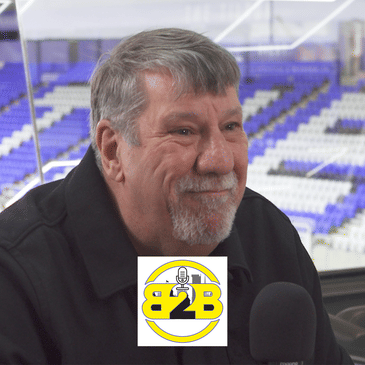
How he keeps so much knowledge stored in his head is just phenomenal—proper Brummie brilliance!
Catch this unmissable episode now and learn about the real stories behind the myth!
#CarlChinn #BirminghamHistory #PeakyBlinders #PodcastEpisode #TrueCrime #BrummiePride #MBE #LocalLegends #BirminghamCulture #CrimeAndHistory
[00:00:00] Welcome to B2B The Business Club Podcast. Our guest today needs no introduction formally, but we'll give you one anyway, Professor Carl Chinn MBE. Can we call you Carl?
[00:00:10] Of course you can call me Carl, that's the way I am, isn't it? I'm one of you lads, isn't it?
[00:00:14] I mean, that's funny speaking.
[00:00:16] Yeah, yeah, yeah, that's it. How are you?
[00:00:20] I'm alright, thanks. Yeah, very good thanks and thank you for inviting me today.
[00:00:23] No problem, thank you for coming down as a famous Villa fan. It must be no small thing to be sitting in St Andrews.
[00:00:29] Listen, you promised me you would not mention this. How could I ever face up to go into the Aston Social, the Aston Tavern again, when you grasp me up?
[00:00:40] The backdrop gives it away.
[00:00:42] Well, this is business, isn't it Zoe?
[00:00:44] Yeah.
[00:00:45] We just wanted to kind of have a chat with you, talk about the business that you're in, that you've been involved with and a little bit about your life really.
[00:00:52] Yeah, yeah, no problem.
[00:00:53] So if we could start with a brief introduction to yourself.
[00:00:56] Yeah, so I'm a social historian. I was a bookmaker for many years. My dad and my granddad were illegal bookmakers until cash betting away from the race course was legalized in 61.
[00:01:08] Dad was Sparbrook, Ladypool Road area. Granddad was Sparbrook, Ladypool Road area. My great grandparents were Sparbrook, Ladypool Road area.
[00:01:17] And although I grew up better off because I was the son of a bookie, we grew up in what we used to call Springfield, which was the borders of Mosey, Hall, Green and Spark Hill.
[00:01:27] Although I grew up better off, Dad and Mum were very proud to be Backstreet kids. So while the old man was Sparbrook, Mum was from Aston. And that's why I'm a Villa fan because I had no choice. Mum was Villa man.
[00:01:41] You were born into it, you were born into it. And Dad's Simon Villa funny enough from Sparbrook. Half the family were blues and half were Villa.
[00:01:49] But Mum and Dad were very proud Backstreet Brubbies. And although, as I said, I grew up better off, I grew up with a very strong sense of pride in the Backstreet values of my Mum and Dad, my grandparents, my great-aunts and uncles.
[00:02:09] Very strong connections with all of them. I worked on the Ladypool Road from when I was 13 in the betting shops. I had a gun at my head twice, armed robberies, got an attack with a machete one day in the office, knife for another time.
[00:02:27] So...
[00:02:28] Curry every lunch.
[00:02:29] Yeah.
[00:02:31] But it didn't start at the Curry house, it didn't really start the Balti belt to my 79, 80, 81.
[00:02:36] And so yeah, I did have Baltis. I had a Balti in Adil's, which were one of the first ones, Alf Eizor's and then there was Imran's and Saleem's, very close to our betting shop.
[00:02:47] But I grew up very much better off in a monetary sense, but culturally very working class.
[00:02:54] Mum and Dad's values were imbued in them from their upbringing.
[00:03:01] Dad was very proud to come out of Stuckley Street, just off the Labour Road.
[00:03:04] Mum was very proud to come out of White House Street, Aston.
[00:03:07] And I'll give an example of that.
[00:03:09] When our Mum was dying and she lived with us for five years after the old man died,
[00:03:13] she was chronically ill, chronically ill.
[00:03:16] And my wife Kay was just a wonderful carer.
[00:03:19] And towards the end, I said to our Mum, Mum, when you go, what do you want?
[00:03:25] And I'm talking now in the old Brummie speech.
[00:03:28] I went, tip me up.
[00:03:30] I said, what do you mean? I know what I meant.
[00:03:32] I said, tip me back on, I want to get back to Aston.
[00:03:35] When my Mum died, I took her back to Aston.
[00:03:38] And we took her down White House Street.
[00:03:40] I don't know if you know White House Street, it's off the Aston Road North.
[00:03:43] Vaguely, yeah.
[00:03:44] Just before the old, before Aston Cross.
[00:03:46] Yeah.
[00:03:47] And there's a pub on the corner called the Albion.
[00:03:49] It's now Christopher's Lounge.
[00:03:50] Yeah.
[00:03:51] I pop in there for a drink after the match.
[00:03:53] Because I'm sitting with me people.
[00:03:56] The ones that have gone before.
[00:03:57] And as we went down White House Street, where the entry would have been to the yard of Back-to-backs,
[00:04:04] where our Mum and Nan had lived, there was nothing there now.
[00:04:08] But Mum's cousin stood.
[00:04:10] And her school pal stood.
[00:04:12] Because that's what the street would have done, wouldn't it?
[00:04:14] And I took her to Aston Parish Church.
[00:04:18] And when we left Aston Parish Church, as soon as we hit the whole pub,
[00:04:22] the funeral director got out and walked her down Whitton Lane.
[00:04:27] And I took her then to Perry Bar and back to Villa Park for the, like, because...
[00:04:34] How long ago was it?
[00:04:35] That was, oh, our Mum's been gone 11 years this year.
[00:04:39] 11 years this year.
[00:04:41] But as always with me, our Mum and our Nan, oh, mad football fans.
[00:04:48] My Nan, 4th and 7th and a half, fighting Aston.
[00:04:52] The first sight I ever saw was our Nan at the old's end.
[00:04:55] And the way fan, we were standing in them days, mid to late 60s, we still stuck with each other.
[00:05:00] And then the way fan nicked our kids fill her out and our Nan turn around.
[00:05:03] Can I swear?
[00:05:05] I turned around.
[00:05:05] And what her Nan had, she had a finger, the index finger on her right hand was missing.
[00:05:10] It was cut off in a power press.
[00:05:13] Accident.
[00:05:14] But she had, when they cut it off, she had a bigger knuckle.
[00:05:17] And when I hit you, she didn't slap her punch.
[00:05:21] And we used to call it a nanny punch.
[00:05:23] Well, it did half hurt.
[00:05:25] And I turned round and it was, well, obviously, you look big to me.
[00:05:29] I was only nine or ten.
[00:05:31] And I turned round, what are you, bastard?
[00:05:32] And she hit him with a right hander.
[00:05:35] And he was so shocked to buy them men were coming round and got rid of him.
[00:05:39] So, I was the first one of the family to go past 15 at school.
[00:05:46] I was the first one to take O levels.
[00:05:48] I was the first one to get to a grammar school.
[00:05:51] I knew how lucky I was.
[00:05:53] So my whole life, my being, my whole purpose has been to pay back,
[00:05:59] not only to my mum and dad and my grandparents,
[00:06:02] but to all those working class people who never had a choice.
[00:06:06] I'm the first one in centuries that had a choice.
[00:06:09] Well, I owe a debt to those that came before.
[00:06:12] Does that play a part then in what you do now?
[00:06:14] It's always mindful of it.
[00:06:15] It's with me all the time.
[00:06:18] Even when we was in the bookmaking, I loved the bookmaking
[00:06:22] because I was talking to, we're talking as we gathered.
[00:06:25] I loved talking to the, people had come in.
[00:06:28] And in the morning it was older people that would come in
[00:06:30] and they knew my great grandparents.
[00:06:33] And, you know, it was the same when I went out to my auntie
[00:06:36] with her nan to say, Pipeys, the Forget Me Not Club,
[00:06:41] or to the Ashton Social or to Kingstand Lake Servicemen
[00:06:44] where different great uncles,
[00:06:45] and they'd be talking to me about my great grandparents.
[00:06:48] Yeah.
[00:06:49] So I was fortunate looking back in that I have a bond with both the south side of Birmingham
[00:06:57] and the north side of Birmingham.
[00:06:59] There's not many brummies have got that.
[00:07:02] Because we tend to be very insure, don't we?
[00:07:04] You know, if you're from the south east side, you stick to the south east side.
[00:07:07] If you're south west or north, you know what I mean?
[00:07:09] Yeah.
[00:07:10] So I feel I was fortunate in that it gave me an understanding of both sides.
[00:07:15] And I was very lucky to have not grown up in poverty, to have grown up well off,
[00:07:19] to have had those opportunities, but to still have had those cultural values
[00:07:23] of working class people instilled in me.
[00:07:25] Mm-hmm.
[00:07:26] I find that that's instilled in quite a lot of people who have grew up in Birmingham really.
[00:07:31] It's working class, and we've got those morals and those intrinsic kind of values of family
[00:07:39] and hard work and stuff like that.
[00:07:41] I feel like, especially our generation and generations above.
[00:07:45] Where are you looking at me when you said generations above?
[00:07:47] You might think that's the second dog he's had at me now to the head is.
[00:07:50] I'd walk out, I'd walk out.
[00:07:52] You don't go for this.
[00:07:53] Do you find though with what you do now particularly that blues and villa doesn't really matter?
[00:07:58] Because you're not, as much as an avid villa you are, you're not, it's not, I don't feel
[00:08:02] like blues are on you.
[00:08:03] I would definitely say, if anybody says I have ever assaulted the blues, the Oblickai.
[00:08:10] Even when I'm down in the match and they start singing songs, there's certain verses I
[00:08:14] won't sing.
[00:08:15] I can tell which one.
[00:08:16] You know what I mean?
[00:08:17] I won't sing them because I'm in the public eye and Birmingham City Football Club carries
[00:08:23] the name of our city.
[00:08:25] I don't like the nastiness that's coming to a lot of the rivalry, but I am, I think the
[00:08:35] one I get very often is by blues fans, they come up and go, love what you do, Carl Putz.
[00:08:40] And then I know what the boys are going to be, you know, the other so and so.
[00:08:45] And they go, how come you're from South Birmingham?
[00:08:47] And then I have to tell the old story of the Fadley, you know what I mean?
[00:08:51] Yeah.
[00:08:51] So I was going to touch on that because during my research for you, I touched upon the fact
[00:08:56] that you are a direct ancestor of one of the Peaky Blinders.
[00:09:00] The descendant, yeah.
[00:09:01] Yeah.
[00:09:02] So, notoriously Birmingham City?
[00:09:05] No.
[00:09:05] No.
[00:09:06] No.
[00:09:06] And you see what we have to look at now, it's become quite, I think quite dangerous a rivalry
[00:09:13] that's growing up around the Peaky Blinders were blues fans.
[00:09:16] The real Peaky Blinders were not around.
[00:09:19] Let's deconstruct all of this.
[00:09:20] This is not football I'm talking about now.
[00:09:22] This is fact.
[00:09:23] There were no Peaky Blinders in the 1920s.
[00:09:27] The series has been brilliant, it's brought a lot of attention to Birmingham, but it's
[00:09:31] drama.
[00:09:32] It's based on one gang in Small Heath in the 1920s.
[00:09:37] There was no Peaky Blinders gang.
[00:09:39] There were numerous Peaky Blinders gangs, not in the 1920s, in the late 19th century.
[00:09:44] And they weren't in one area.
[00:09:46] Now actually, this is Bornsley.
[00:09:48] If we start nitpicking, now the districts overlap, of course they do.
[00:09:52] But the main gangs were in the 1890s and the turn of the 20th century.
[00:09:57] So the idea that these men were interested in football is wrong.
[00:10:03] And we shouldn't really be, I understand the connection because of Stephen Knight and
[00:10:08] he's a Birmingham City fan and you know, bringing the name of Small Heath in.
[00:10:11] I understand all that.
[00:10:13] But I think we've also got to be a bit careful.
[00:10:15] Because I talk to a lot of Villa fans who are really antagonistic to the portrayal on
[00:10:20] one side.
[00:10:21] Blues being.
[00:10:22] Yeah.
[00:10:22] Blues weaponise it, you know what.
[00:10:23] Blues fan, you weaponise it somewhat.
[00:10:25] So I think we have to be careful.
[00:10:27] And that's all I'm saying is, I'm not knocking it.
[00:10:30] But I think we have to look at the reality.
[00:10:33] Who and where were the real gangs?
[00:10:36] There was just down the road here.
[00:10:37] Yeah.
[00:10:38] In Bordesley and Derry Tender were numerous gangs.
[00:10:41] The worst gangs were the Bar Street Gang from Great Bar Street.
[00:10:47] Milk Street Gang.
[00:10:48] Park Street Gang, which we would now see would be Derry Tender Dibbeth.
[00:10:51] Yeah.
[00:10:52] Across the way.
[00:10:54] The Barford Street Gang in Highgate.
[00:10:56] The Highgate Street Gang.
[00:10:58] The Sparbrook Street Gang, which my great-great uncle was a leader of.
[00:11:02] Derry.
[00:11:02] Derry.
[00:11:03] His younger brother was my great-grandfather.
[00:11:32] Derry.
[00:11:32] Across Aston Station.
[00:11:33] Yeah.
[00:11:34] Right?
[00:11:34] Just to the right there by the canal, there's ten archies.
[00:11:37] So you're right by a main thoroughfare, but it's isolated.
[00:11:40] Yeah.
[00:11:41] There were gangs in Gloucester Green.
[00:11:44] There were gangs in Laidwood.
[00:11:46] The Submaril Gang.
[00:11:47] In Hockley, the Camden Street Gang.
[00:11:49] So the idea that there was one gang that supported one particular team,
[00:11:54] they didn't support football teams.
[00:11:56] They used that just as a vehicle.
[00:11:58] They didn't even bother with the football.
[00:12:00] You know, so the idea, these were violent folks.
[00:12:04] Now, within those gangs, there were young men, a bit like the Hurricanes of the 70s and 80s,
[00:12:10] who were ready for the fighting.
[00:12:12] And then got married.
[00:12:14] And the wives dragged them away.
[00:12:16] But others remained involved.
[00:12:19] And most of these that were involved were hardened criminals as well as violent men.
[00:12:23] So let's look at my great-grandfather.
[00:12:26] Five foot four and a quarter.
[00:12:27] And then, after.
[00:12:28] Petty thief.
[00:12:29] My great-grand-oncle Bill on my dad's side.
[00:12:32] My dad's mum's side.
[00:12:34] The Derricks, the Peaky Blinders.
[00:12:36] Yeah.
[00:12:37] My dad's paternal side.
[00:12:38] My great-oncle Bill chin saw him steal a cider making from outside a shop.
[00:12:44] A butcher shop on the medical road.
[00:12:46] He's had a big crime.
[00:12:48] Now, it's a big crime to the shop owner, but it's petty theft.
[00:12:52] Yeah.
[00:12:52] He got done for attacking the police.
[00:12:55] Peaky Blinders hated the police.
[00:12:58] On one occasion, he had to fight the man, picked up a shovel, that never worked, so he picked up a meat cleaver.
[00:13:02] He cleaved the man's head.
[00:13:04] He got three years.
[00:13:06] He could get five years for uttering false coins.
[00:13:09] Right.
[00:13:10] But the worst thing he used to do is to come home regularly, mock you drunk.
[00:13:14] And old people from my dad's street told me this in the eighties when I interviewed him.
[00:13:18] And then I found court records.
[00:13:21] In fact, a killer, he beat her up, my great-grandmother.
[00:13:24] These are not meant to be admired.
[00:13:27] Is this a frustration of yours, kind of the glamorization of, and again, it's the kind of people, isn't it,
[00:13:33] finding the difficult balance between drama and reality, where they'll glorify something,
[00:13:38] they'll take that in there, right, this is us.
[00:13:40] Without knowing the actual details, people are based on that.
[00:13:43] I think, again, I've got to put around this, what Stephen Knight has done is tremendous.
[00:13:50] But where I sometimes have had, well, not sometimes, where I've had a problem is when people associated with it,
[00:13:55] whether it be the BBC or other, with the series, are saying it's based on a real gang.
[00:14:00] It's not.
[00:14:02] The term Peaky Blinders was a pre-First World War term.
[00:14:06] Basically, it was a generic term for the hooligans of Birmingham.
[00:14:11] There wasn't just one gang, there were numerous gangs.
[00:14:13] So we have to make sure that, whilst we understand that there's a drama, and we appreciate the drama,
[00:14:22] and it's got a compelling soundtrack, charismatic performances, wonderful storyline, it's not real.
[00:14:30] And gangsters are not meant to be admired.
[00:14:33] They are not mafia-style dons that respect women, are kind to children, that look after the elderly.
[00:14:40] No, they don't. They abuse their own.
[00:14:42] And the Peaky Blinders not only battled each other and baited the police,
[00:14:47] they bullied the poor amongst whom they lived.
[00:14:52] So we have to get the reality out of there.
[00:14:54] Because there's...
[00:14:55] It's not as romantic.
[00:14:56] It's not romantic.
[00:14:57] I understand why it's not as good a story.
[00:15:01] But that's the reality.
[00:15:03] Of course.
[00:15:03] It's like the actors, isn't it?
[00:15:04] It's like the actors in the soaps apply villains and then get stick in the street from people
[00:15:08] Yeah.
[00:15:08] When they go shopping and they go and explain, look, I'm a character.
[00:15:10] I'm not a romantic character.
[00:15:11] Yeah.
[00:15:12] So I think it's really important that we get that perspective of the reality correct
[00:15:18] and that we recognise that drama is drama.
[00:15:21] It's not historical reality.
[00:15:23] And unfortunately for a lot of people, it has become the historical reality.
[00:15:27] So there will be a lot of the cries as well though.
[00:15:29] The Reap the Might, the film when it's handsome...
[00:15:32] Who was it that played?
[00:15:33] Brent Boyd Pryor.
[00:15:34] The Kemp's played at one time, didn't they?
[00:15:35] The Kemp's.
[00:15:36] Yeah, they Kemp's were the original, weren't they?
[00:15:38] And then Tom Hart played at one time.
[00:15:38] And it's this idea that, you know, the East End was safe when the Kroetys were around.
[00:15:41] But it was if they liked you.
[00:15:43] Yeah.
[00:15:43] But if they didn't like it, it wasn't safe.
[00:15:45] If you use the hat.
[00:15:46] You know what I mean?
[00:15:47] Or whoever.
[00:15:49] So, how accurate was it, the stories of them coming to Birmingham and being told to leave
[00:15:54] Birmingham?
[00:15:54] Well, I can only tell you what I was told by the late Gordon Futur.
[00:16:00] And there's loads of stories about them coming to Birmingham and massive fights with hundreds involved.
[00:16:06] Listen, back in the 70s when we used to go away as football fans, you'd be a big load of you coming off the football special.
[00:16:14] And if the art men at the front ran, you ran.
[00:16:18] Yeah.
[00:16:19] So, basically, the fighting was between a few people.
[00:16:23] Yeah.
[00:16:23] And it was the same back then.
[00:16:25] Can you imagine hundreds fighting in the Burma City Centre with the Krays?
[00:16:28] The Krays had a small mob.
[00:16:30] A nasty mob.
[00:16:32] A very horrible mob.
[00:16:33] What happened was, according to Gordon Futur, who I interviewed, he said one night him and his brothers were at the club, the senior club, owned by Eddie Futur.
[00:16:46] And these Londoners came in and says, Reggie and Ronnie have sent us.
[00:16:52] We want to have it.
[00:16:54] And they typical brothers went, Reggie and Ronnie, you.
[00:16:57] And he kicked off.
[00:16:59] But the four or five of them and four or five of the Futurals.
[00:17:03] And they won, the Futurals won.
[00:17:05] Yeah.
[00:17:06] And put them in a taxi to get back home to the station.
[00:17:10] So, that was what I was told.
[00:17:12] There are all these stories of big battles of the Stonehouse pub.
[00:17:15] Yeah.
[00:17:16] Yeah, which you heard.
[00:17:17] Yeah.
[00:17:18] That was the story.
[00:17:19] You know, there's no evidence of any of that.
[00:17:21] Mm-hmm.
[00:17:22] So again, it would be, but I'm not stupid.
[00:17:24] I only rise back gangsters and be dead for a hundred times.
[00:17:28] So don't expect me to delve into that one deeply.
[00:17:31] Fair enough.
[00:17:32] So when did, when did you actually take the jump to get into academia and academic learning?
[00:17:38] Because you work at, you're at the university now?
[00:17:41] No, thank God.
[00:17:42] But I mean, I was made an unexpected redundancy eleven years ago for my unique and pioneering role as community historian.
[00:17:49] Oh, okay.
[00:17:49] Right.
[00:17:50] And then I was disillusioned.
[00:17:52] So I left my teaching post, I think six years ago.
[00:17:55] Okay.
[00:17:55] Seven years ago.
[00:17:56] I just had enough.
[00:17:57] Because there's, I feel that too many Red Rick universities are infused with an elitist attitude.
[00:18:06] And that people from our backgrounds, you do hit a glass ceiling and you have to keep on justifying yourself.
[00:18:15] I faced a lot of prejudice in my time, not necessarily at the university, but throughout my public career over my background and particularly over my accent.
[00:18:23] And I can't tell you how often that happened, particularly at the BBC, where I was called in by managers to say they had complaints about the way I spoke.
[00:18:32] This is local radio.
[00:18:33] Yeah.
[00:18:35] And by-
[00:18:35] Who's on WM for?
[00:18:37] Yeah.
[00:18:37] WM.
[00:18:39] I was called in three occasions.
[00:18:41] Literally every DJ on WM at the time.
[00:18:44] Yeah.
[00:18:44] How did brought me out of the way?
[00:18:45] Not that it was me, see.
[00:18:46] I was probably the first one that had such a broad accent and also used dialect words.
[00:18:52] And I was called in on one occasion because they, somebody I was, that they said he's exaggerated his accent.
[00:19:00] And I said to the manager, I said, you know, when you're talking to somebody from your own background, you wouldn't know this because he's middle class.
[00:19:07] Mm-hmm.
[00:19:07] I said, you do talk broader, don't we?
[00:19:10] Yeah.
[00:19:11] And because I was the first one that spoke so broadly, when you're talking on and recording, it sounds broader again.
[00:19:18] It's magnified, isn't it?
[00:19:19] Yeah.
[00:19:19] And I had people writing in saying I was making money from the accent.
[00:19:23] I'd have made a lot more money if I just spoke RP.
[00:19:25] A lot more money.
[00:19:28] That's a really hard.
[00:19:29] On one occasion, I was poor and giving because I'd use the term wench.
[00:19:33] Now, I would only use the term wench to an older Bromby woman or my daughters who use the term or other young women that understand it.
[00:19:41] Yeah.
[00:19:41] Because outsiders have got, again, typical middle class, they impose their interpretations which are misguided and ignorance on our words.
[00:19:50] Yeah.
[00:19:50] But I wouldn't use it to somebody from, who didn't know what the term meant.
[00:19:54] And I called this old lady wench and I got pulled in by the manager.
[00:19:57] We don't know what you're using that word.
[00:19:59] It's a slur.
[00:19:59] I said, why not?
[00:20:00] It's a slur.
[00:20:00] He said, no, I said it's not.
[00:20:02] The next Sunday, first call I got with someone old lady there.
[00:20:06] He says, Carl, I love it when you call us old ones wenches.
[00:20:09] And I thought, put that in your pipe and smoke it.
[00:20:12] Yeah.
[00:20:12] I had another occasion they did that.
[00:20:15] I was on holiday.
[00:20:16] And the manager rang me up.
[00:20:18] He said, we've had some focus groups.
[00:20:22] And they all agree that you're intelligent and you ask the right question.
[00:20:27] You let people talk and they like the way that you bring in people of all backgrounds, but they don't like you.
[00:20:33] This one group listens.
[00:20:35] I said, so they like everything that I do, but they don't like me.
[00:20:38] And Milpush coming and she says, yeah, it's your accents.
[00:20:40] I said, so where was the group from?
[00:20:43] Wilshire.
[00:20:43] Sutton Colford.
[00:20:44] Sutton Colford.
[00:20:45] Not looking at all Sutton Colford people.
[00:20:47] Yeah.
[00:20:47] Because most are Bromis.
[00:20:49] But there is an element of people in our region who are ashamed of the way we speak.
[00:20:56] Well, I'm not.
[00:20:57] That is astonishing.
[00:20:58] You can't imagine any other community or other community where you would speak your native tongue and be called for it.
[00:21:09] And so it's something that I've focused on fighting is classism, accentism.
[00:21:19] People might say, well, you're making these terms up.
[00:21:21] No, you don't.
[00:21:22] No, you don't make these terms up.
[00:21:24] I've taught students.
[00:21:25] I've taught at the university.
[00:21:28] She said, Carl, I was sitting in the class, a small room like this, a seminar, and the lecturer went round.
[00:21:34] And she said, well, you won't be honest to this because you went to a comprehensive.
[00:21:38] I said, you've got to complain, but she was intimidated.
[00:21:42] Yeah.
[00:21:42] You see these polls, don't you?
[00:21:43] Going around Birmingham is the accent of Birmingham and this, that, and the other.
[00:21:48] Well, I won't answer.
[00:21:49] See, fairly often people ring me up for the news and say, what do you think of this latest poll?
[00:21:53] I said, I don't react to them anymore because they're self-serving polls.
[00:21:58] They're not done on random sampling or with social scientific techniques.
[00:22:04] It's a group of perhaps 15 to 20 people, but it keeps on bringing it round and round.
[00:22:09] It's a self-defeating project, so I won't even respond to them anymore.
[00:22:14] Yeah.
[00:22:15] Because it's just gobbling you, sir.
[00:22:16] And I'm not being a digger.
[00:22:17] I suppose getting a quote from you is kind of, oh, we'll get a quote from you.
[00:22:20] So I've been, he said he hasn't done for years.
[00:22:22] And I'm not being a digger, if that could happen to me with a high profile that I've got.
[00:22:27] How hard is it for a working class kid who's trying to break through?
[00:22:31] So I'll keep on fighting and try and push that door of prejudice a little bit further open.
[00:22:36] And with God's grace one day we'll knock it down.
[00:22:39] Yeah.
[00:22:41] How's you finding the Peaky Blinders stuff that you're doing at the moment?
[00:22:43] Are you studying all the Peaky Blinders?
[00:22:44] No, I had to cut back quite a lot.
[00:22:46] Obviously we had lockdown.
[00:22:47] Yeah.
[00:22:48] So we stopped the...
[00:22:48] What did you do?
[00:22:49] I was writing.
[00:22:51] What was that?
[00:22:52] Yeah, I was writing.
[00:22:54] My wife Kay had breast cancer soon after.
[00:22:58] So thank God she's doing well.
[00:22:59] Yeah.
[00:23:00] But the NHS are, you just, I can't praise them enough.
[00:23:04] Yeah.
[00:23:05] I really can't.
[00:23:07] So I've had to cut back.
[00:23:09] I still go out doing a bit of teaching in schools.
[00:23:13] Various projects.
[00:23:15] Do a lot of work with Art Bishop Hills, Leigh, Haycock's Green.
[00:23:18] A lot of work with them.
[00:23:19] A really interesting school with lots of...
[00:23:23] The demographics have changed a lot.
[00:23:26] Whereas once it was made the Irish Broby descent.
[00:23:29] Now it's much more wide.
[00:23:32] But I go in and there's a wonderful group of teachers there that are so connected to the
[00:23:37] youngsters and want them to do well.
[00:23:39] Excuse me.
[00:23:40] I do a few talks a year for the Old Crown.
[00:23:43] Yeah.
[00:23:44] At the Old Library in Heathrow Lane, which is a stunning building.
[00:23:48] It's Kim a talkie.
[00:23:49] Kieran's still got the Old Crown.
[00:23:50] Kieran's still got the Old Crown.
[00:23:51] And so I...
[00:23:52] That's all we first met, wasn't it?
[00:23:53] That's what we said.
[00:23:55] They asked me if I'd do a few tours this year.
[00:23:59] So I did one in December and then I'm doing a few this year through the Old Crown.
[00:24:04] Yeah.
[00:24:04] But not as many as they used to do.
[00:24:06] You used to do flat out in fact.
[00:24:07] I used to love it and I was teaching as well.
[00:24:10] Because once you're freelance, you've got a tech work with you.
[00:24:13] You get it.
[00:24:13] You know that.
[00:24:14] Yeah.
[00:24:15] I'm still writing.
[00:24:16] I've just written another major book on the real Peaky Blinders.
[00:24:20] Because that's what...
[00:24:21] What's the count, eh?
[00:24:22] 30?
[00:24:23] I've written 37 books now.
[00:24:25] Yeah.
[00:24:25] 37 books now.
[00:24:27] How long did you include as one of them taking?
[00:24:29] It just depends.
[00:24:30] It all depends on the type of book it is and the amount of research.
[00:24:36] So the...
[00:24:37] For example, the one Peaky Blinders, The Aftermath and The Legacy, which were...
[00:24:43] Really looking at what happened to the gangs after.
[00:24:47] So let me just take you back a stage.
[00:24:50] The real Peaky Blinders, a small group of them, were the catalyst for organised crime in England.
[00:24:58] That's where there is a connection with the series.
[00:25:00] So obviously you've seen the series.
[00:25:02] So series one, Billy Kimber, the guy who was running the race course rackeys.
[00:25:07] How was he portrayed?
[00:25:09] Was he a small Londoner or a big brother?
[00:25:11] He was a small Londoner, wasn't he?
[00:25:13] He was a deep brother in reality.
[00:25:15] Right.
[00:25:16] I know his family, his descendants.
[00:25:17] Yeah.
[00:25:18] Billy Kimber was not a small Londoner.
[00:25:20] He was a big early brother who'd been a Peaky Blinder.
[00:25:23] And a lot of the most vicious, violent criminals of the Peaky Blinders went racing.
[00:25:31] Why did they go racing?
[00:25:33] They went to small gangs and pickpockets.
[00:25:35] What do people carry you?
[00:25:37] Cash.
[00:25:37] And they didn't only pickpocket, they then started to blackmail the bookmakers for protection money.
[00:25:43] And by about 1910, 11, Billy Kimber had risen to control a loose collection of race course roads from Birmingham.
[00:25:53] These little groups of six, seven.
[00:25:55] And he was the top boy of all of them.
[00:25:58] And he moved down south.
[00:26:01] And he allied, he was very clever.
[00:26:03] He not only would have got a fearsome reputation as a fighter, but he got a brain.
[00:26:07] And he allied with the Garnhams from Chapel Market in Inglinton, who had a little mob.
[00:26:14] With George Sage from Camden Town and his mob.
[00:26:19] And the Elephant Boys, the McDonalds and the Elephant Boys from South London.
[00:26:24] And they took over the race course rackets down south.
[00:26:28] After the First World War, race of the tendencies boomed.
[00:26:32] And Laura Ben coming out with their gratuities.
[00:26:35] Most went over, but a lot wanted a booze and bet and enjoy themselves.
[00:26:40] And the Birmingham Gang, a rough collection run by Billy Kimber, also known as the Bromwich and Boys.
[00:26:48] Dominated the race course rackets in the Midlands of the North.
[00:26:51] Up to the top of Yorkshire where the Newcastle Gang took over.
[00:26:56] But basically the Midlands and most of the North, Lancashire, most of Yorkshire, Cheshire was run by the Birmingham Gang.
[00:27:05] There after the war they moved down south.
[00:27:07] Alloyed with their London pals.
[00:27:08] And took over down south, but they were racist.
[00:27:11] And they extorted extra money from the Jewish bookmakers.
[00:27:16] One of those Jewish bookmakers was a man called Alfie Solomon.
[00:27:19] Is there a name ringer bell?
[00:27:20] Tom Hardy again.
[00:27:21] Yeah.
[00:27:22] So the series is called Solomon's.
[00:27:24] His name was Solomon.
[00:27:26] How do I know that?
[00:27:27] I interviewed his younger brother in 1987 in a very rough pub in North London.
[00:27:31] Really?
[00:27:32] Yeah.
[00:27:33] Wouldn't let me interview him.
[00:27:34] I had to write down my notes.
[00:27:38] I interviewed lots of other people in the mid 1980s.
[00:27:41] I was writing a book about illegal bookmaking, because the family had been illegal bookies.
[00:27:45] And I went all over the country, up to Aberdeen, over to Norwich, down to Exeter, all over.
[00:27:51] But I wanted to learn more about race course bookmaking, because we were off course bookies.
[00:27:55] We never went racing, because we were taking bets.
[00:27:59] We were racing was on.
[00:28:01] And the old man was president of our dad book, was president of the Birmingham Bookmakers Association,
[00:28:06] the Protection Association.
[00:28:07] Which I later found out was started by a criminal to go semi-legitimate.
[00:28:14] And dad put me in touch with an old bookmakers, and it was they who told me about the race course war of 1921.
[00:28:21] Now I wrote about that race course war in a book in 1991.
[00:28:26] I wrote about the real Peaky Blinders in my doctoral thesis in 1986.
[00:28:31] So I'm not a Tronicom lately.
[00:28:34] Yeah, yeah.
[00:28:35] I've been researching and writing about the real Peaky Blinders, the real Billy Kimper, the real Alfie Solomon for 40 years.
[00:28:42] Have you spoke to Stephen Baddy? Is he-
[00:28:44] No, I've spoken to him.
[00:28:45] No. I imagine he's called upon your work to research it.
[00:28:49] Don't know.
[00:28:49] No.
[00:28:50] Met him fleetingly once, very fleetingly.
[00:28:53] And I shook his hand and said thanks for what you've done with the Birmingham, and that was it.
[00:28:57] Seems like a partnership made in heaven that there's you and Stephen Knight for Birmingham.
[00:29:03] The thing is obviously for dramatic purposes, it's not like a slight on Stephen or what he does.
[00:29:07] No, no.
[00:29:08] You take something, you dramatise it.
[00:29:10] It's like based on true events, isn't it?
[00:29:12] Pretty much not enough sense of all the horrible film.
[00:29:15] What happened if they were successful in using real names like Billy Kimber, Darby Sabini?
[00:29:19] Now, so what happens is they call him Darby Sabini to protect the Jewish bookmakers.
[00:29:22] I interviewed the son of his main enforcer, Darby Sabini's main enforcer in 1987.
[00:29:28] So what I'm telling you about is based on 40 years of research into the Peaky Blinders,
[00:29:34] into the real gangs, and knowledge of them based on talking to people that were actually either gangsters or associated.
[00:29:44] That's right, the Morphin Man.
[00:29:45] Yeah.
[00:29:46] Legitimate sources.
[00:29:47] And rare memoirs and masses of research into newspapers, into court records, national archives, lots of records such as those.
[00:29:56] And so there were real people whose names are used, but the real people were very different to the fictionalised characters.
[00:30:08] So Tom Hardy, for example, how is he portrayed?
[00:30:11] Is he seen as an Orthodox Jewish guy with his long front coat and his height?
[00:30:17] Of course he is not.
[00:30:17] But he wasn't like that.
[00:30:19] He was secular Jewish.
[00:30:20] Yeah.
[00:30:21] If it had been Orthodox, he'd have been in the synagogue studying the Torah.
[00:30:27] He'd have been a kid that wasn't a small Londoner.
[00:30:29] He was a big Burney Brubbie from Subber Lane.
[00:30:31] So again, this is where the idea of football is silly because these men and these gangs came from all,
[00:30:39] they were from all the bad gangs of Birmingham.
[00:30:42] Yeah.
[00:30:42] They weren't football fans.
[00:30:46] I just wanted to touch upon some of the teaching that you do in school.
[00:30:51] Yeah.
[00:30:52] So I wasn't sure whether it was a Mandela effect thing in my head, but I'm sure when I was in primary school we learned about Bjorn Ingerham.
[00:30:59] Yes.
[00:31:00] Yeah.
[00:31:00] And I asked my daughter, I've asked my youngest kids now whether any of them have heard of this story.
[00:31:05] And no, it doesn't get taught anymore.
[00:31:07] No, and it's, you were, I'm not sure whether I imagined it or not, but I remember Bjorn Ingerham.
[00:31:11] Was he, he came and said.
[00:31:12] I have heard he's on the radio, can't he?
[00:31:15] Yeah.
[00:31:15] We had a, we had a, we went down and we'd done an assembly, we had three of them in class.
[00:31:18] Yeah.
[00:31:19] That, where was the school?
[00:31:20] Oh, it's the Rosary.
[00:31:21] Yeah.
[00:31:22] The Rosary.
[00:31:22] Yeah.
[00:31:23] Yeah.
[00:31:24] So it wasn't Bjorn, it was a Bayoramah.
[00:31:28] Bayoramah Ingerham.
[00:31:30] So the ham is home.
[00:31:31] How do Scottish people say home?
[00:31:33] Oh.
[00:31:34] Ham.
[00:31:34] Yeah.
[00:31:35] So the A becomes a no in much of England, but we continue that A to a no in words like
[00:31:43] mom.
[00:31:44] Not man, mom.
[00:31:47] Mm-hmm.
[00:31:47] Again, that was something I was pulled up for on the radio saying mom.
[00:31:50] I was also pulled up for saying Orsesta.
[00:31:54] For the Orsesta Road.
[00:31:56] What?
[00:31:56] He said, should say Orsesta.
[00:31:57] I said no, it's Orsesta Road.
[00:31:59] For Worcestershire.
[00:32:04] So, so Bayoramah, his ham was his home.
[00:32:08] Hogestead.
[00:32:08] In gas for people.
[00:32:11] And Bayoramah was a man's name.
[00:32:12] Might have been a short leader Bayomund.
[00:32:15] And he was an immigrant.
[00:32:17] He was an uncle, a German.
[00:32:20] He's people were Germanic who come over from the borders of what is now Denmark and North
[00:32:25] Germany, the Joplin Peninsula.
[00:32:26] And on the Joplin Peninsula, just below the Danish border is another small peninsula called
[00:32:32] the Angelen Peninsula.
[00:32:35] Well, who did the Angles give their name to?
[00:32:38] England.
[00:32:39] Angelen.
[00:32:40] England.
[00:32:41] Where did they first settle?
[00:32:42] Well, you look from Denmark across the sea, East, Anglia, the land of the East Angles.
[00:32:48] And then they started to the west.
[00:32:52] And Bayoramah would have been a small, probably a small chieftain.
[00:32:56] Or an extended family.
[00:32:59] Probably a warrior.
[00:33:01] And he would have arrived here probably in the mid 600s, about the top of the Staffordshire hood.
[00:33:07] Which is transforming our understanding of the so-called dark ages.
[00:33:11] And at the time when Pender, who was recording Penderford, the last pagan King of Mercia,
[00:33:19] and he was bringing together all these little groups, tribal groups, into the Kingdom of Mercia.
[00:33:29] And we're not taught these things at school.
[00:33:31] No?
[00:33:32] You'd think the origins of Birmingham would still be in some curriculum, wouldn't you?
[00:33:36] Yeah.
[00:33:36] Especially at primary school level.
[00:33:38] Well, I'll tell you what, I'm really chuffed that when you were at school, you were taught.
[00:33:43] Because the most we was ever taught at school was at Baltimore to Murdoch.
[00:33:48] Right.
[00:33:49] And when we were taught, the De Birminghamers now back to the De Birmingham family.
[00:33:53] No, it wasn't.
[00:33:54] The De Birminghamers took their name from Birmingham.
[00:33:56] They were the Lord of Birmingham.
[00:33:59] Yeah, see this is the thing.
[00:34:00] It's nice to be verified and actually have that confirmed as wrong.
[00:34:03] You better get Carlton to Goldstie, yeah well.
[00:34:06] See you give me your name.
[00:34:08] Yeah, I've got one in my pocket, sir.
[00:34:11] I've mentioned this to people before.
[00:34:12] People look at me like I've got it wrong.
[00:34:14] I'm lying or I'm misunderstood.
[00:34:16] No, that is genuinely, yeah, we had like an assembly for it.
[00:34:19] And we all went back to the house but...
[00:34:20] Really shout out the Rosary promise.
[00:34:23] Well done.
[00:34:24] Yeah.
[00:34:24] Mr. Catherine.
[00:34:25] So your family, this Irish descent?
[00:34:27] Yeah.
[00:34:28] Yeah.
[00:34:29] Where from?
[00:34:30] Cavern.
[00:34:31] Cavern.
[00:34:31] Cavern Hall.
[00:34:32] I'm not going to say nothing.
[00:34:35] More pugs than people.
[00:34:37] We went over there once in the 90s and we were single, a couple of single lads, no chance
[00:34:43] of pulling because every time you went and spoke to some women that are related to you.
[00:34:48] Yeah, yeah, yeah.
[00:34:48] We're super careful.
[00:34:49] Can you think of that?
[00:34:50] They're called the hills around there, Dromlins don't they?
[00:34:52] That's it, yeah.
[00:34:53] Dromlins, the land of Dromlins.
[00:34:54] Yeah.
[00:34:55] So we grew up Fifth Avenue then Borsley Green.
[00:34:57] Did you?
[00:34:58] Right, Fifth Avenue, somewhere from here.
[00:34:59] Yeah.
[00:34:59] So we used to walk to and from.
[00:35:01] Well you would, and what's interesting there, all the roads are joined apart from
[00:35:05] Sherrywood Road which is a much older road.
[00:35:07] Yeah.
[00:35:07] And Blake Street which is much older.
[00:35:09] All the other ones are early 20th century.
[00:35:12] So look at the other roads that are down by you.
[00:35:14] Pretoria Road.
[00:35:15] Yeah.
[00:35:16] Yeah.
[00:35:16] Church Road.
[00:35:17] By far.
[00:35:17] So what does that tell us?
[00:35:20] Go on.
[00:35:21] Second South African War.
[00:35:23] Right.
[00:35:23] Leader of the South African forces, was it General Bowers, that?
[00:35:27] Oh, it's just about Pretoria.
[00:35:28] Church Road was involved.
[00:35:31] Pretoria is a major settlement, major town city in South Africa.
[00:35:36] So all those roads, apart from Fifth Avenue, Fordra of Lane is different, that's an old
[00:35:42] word.
[00:35:43] And I'm going to really upset you two now.
[00:35:46] It was originally owned by the Holtz of Aston.
[00:35:48] Oh really?
[00:35:49] Yeah.
[00:35:49] That's what we moved.
[00:35:52] And that's where again, it's silly, all these arguments between us.
[00:35:57] Because we're all into.
[00:35:58] We're all belong to each other.
[00:36:00] Yeah.
[00:36:00] You know, we all belong to each other.
[00:36:03] I want to go to your MBA.
[00:36:05] How did that, will that happen?
[00:36:06] What's your...
[00:36:06] I didn't know.
[00:36:07] It was the results of John Major bringing in people's MBAs.
[00:36:11] Whereas instead of being recommended by these worthies, that people could raise petitions
[00:36:19] or whatever to get somebody.
[00:36:20] I mean, I didn't know several people had raised petitions.
[00:36:23] And I've got the positions, it was very moving.
[00:36:26] And when I got it, I mean, my family were royalists.
[00:36:29] My mum and dad, back street.
[00:36:32] Kids.
[00:36:33] All my family was so ecstatic.
[00:36:36] And my wife says, Kay said, Carl, you always felt...
[00:36:41] I felt that it wasn't just for me.
[00:36:43] I felt it was for us.
[00:36:45] It belonged to us.
[00:36:46] So I said to me, why don't you mention on the radio that you're going to have a drink
[00:36:50] up the town and people can meet you.
[00:36:52] So I said, we're going to have a drink in the old crowd.
[00:36:54] And when I got there, it was round.
[00:36:56] And the Irish pipe band piped me in.
[00:36:59] Oh, well that was so moving.
[00:37:02] And the mail then was selling lots of copies and they did a big front page with Carl G.M.B.E.
[00:37:10] And they took it round the pub and people signed us.
[00:37:12] I've got to see the office.
[00:37:13] It's one of my most prized possessions.
[00:37:16] So it was for contribution to charity and to local history.
[00:37:20] Because what I did with charity, I didn't do big events.
[00:37:24] What I liked to do, and I've had to cut back, but what I liked to do is go to small, local places.
[00:37:30] That got very little attention.
[00:37:33] In working class districts.
[00:37:35] I'd give a tour for nothing.
[00:37:38] Brink a few books.
[00:37:40] Brace some money from sales of the books of the charity.
[00:37:43] And I...
[00:37:44] Get some money behind the bar.
[00:37:45] Yeah.
[00:37:46] It would just be, it'd be really...
[00:37:48] It helped.
[00:37:49] It helped.
[00:37:50] And I'm not saying I was better or worse than anybody else, but that was my approach.
[00:37:54] I did.
[00:37:54] Some people do the big events.
[00:37:56] Like at the Symphony Hall and places like that.
[00:37:58] But for me, I preferred to go into the community.
[00:38:02] That's brilliant.
[00:38:03] Much preferred that.
[00:38:04] Mmm.
[00:38:05] I've done a lot with the Irish, obviously, as you know, over the years.
[00:38:08] Although I'm married to an Irish woman.
[00:38:10] I don't know if you know that.
[00:38:12] My wife came from Dublin.
[00:38:14] Yeah.
[00:38:15] I'm loving my life.
[00:38:15] We met 47 years ago in the most exotic holiday location.
[00:38:20] The Pig & Whistle in Benidorm.
[00:38:22] The Pig & Whistle in Benidorm.
[00:38:23] The Pig & Whistle.
[00:38:24] Yeah.
[00:38:24] True.
[00:38:26] Walked in with my mate, my kid and my mates.
[00:38:29] My palmet with some Chelsea fans.
[00:38:31] And we were stopping at what...
[00:38:32] Do you know Benidorm?
[00:38:33] Mmm.
[00:38:34] Yes.
[00:38:34] You have the English courts and the square.
[00:38:36] The English square.
[00:38:36] So we were stopping by there.
[00:38:38] I think we were in the Hotel Creplum.
[00:38:40] And we decided once the sat in order were going to go into the old town.
[00:38:46] And walked in this...
[00:38:47] We must have had a good drink.
[00:38:48] We walked in this little pub.
[00:38:50] Still there.
[00:38:51] And this beautiful looking Irish girl turned around with milky white skin.
[00:38:54] Beautiful green eyes.
[00:38:55] Long dark hair.
[00:38:56] And I fell in love with her.
[00:38:57] And there would be chatted up by Dutch guys.
[00:39:00] I just walked over.
[00:39:01] And I was never confident of me girls.
[00:39:04] But that day and night, I must have had a couple or three.
[00:39:07] Yeah.
[00:39:08] And I just went up to her and said,
[00:39:09] Just fall in love with you.
[00:39:10] Will you marry me?
[00:39:11] And they looked at me and said,
[00:39:13] You're a drunken Englishman.
[00:39:14] And I don't know where I got that idea from.
[00:39:18] We met again by accident the next day
[00:39:20] in a pub called Champions,
[00:39:22] which was a gathering point back then.
[00:39:25] And we wrote to each other for four months.
[00:39:30] And she flew over to Birmingham in the January,
[00:39:33] which was the third time we met her and I proposed.
[00:39:35] And she said yes.
[00:39:37] And the next day,
[00:39:38] before we went to get the ring,
[00:39:40] I had to ring up her dad, Mr Doyle,
[00:39:42] in Fingers West,
[00:39:43] a very tough estate in North Dublin,
[00:39:45] to ask permission to marry his beloved Irish Catholic daughter.
[00:39:49] And Mr Doyle thought it was bad enough
[00:39:50] his beloved Irish Catholic daughter was marrying an English Protestant
[00:39:53] who she'd met in a pub called the Bigger Whistle.
[00:39:55] But with my name, a chin,
[00:39:57] they thought I was Chinese-English Protestant.
[00:40:00] And a mob used to go and got the love letters
[00:40:02] and go,
[00:40:02] What's this war-o-bat mean?
[00:40:04] What does war-o-bat mean?
[00:40:05] Are you sure these fellas?
[00:40:07] Is he English-Chinese?
[00:40:09] What's that answer you say?
[00:40:14] That's brilliant.
[00:40:15] I got married in September.
[00:40:18] Where did you get married?
[00:40:19] In Dublin.
[00:40:20] Did you?
[00:40:20] Yeah, in the church denunciation.
[00:40:22] I think I was the only left-footer ever to get married in there.
[00:40:25] Wouldn't give me a career left-footer.
[00:40:27] Wouldn't give me a career, no.
[00:40:28] No.
[00:40:30] I think I was the first member of my family
[00:40:32] to get confirmed since the Reformation.
[00:40:35] Because in Anglicans, Church of England,
[00:40:37] it's actually matching, dispatching, births, deaths and marriages.
[00:40:41] Yeah.
[00:40:43] But I wanted to have the...
[00:40:45] Because I am religious.
[00:40:46] I don't push it on anybody.
[00:40:49] It's my faith.
[00:40:51] I don't go to church, but I have a faith.
[00:40:54] And I wanted to have...
[00:40:55] Because it was the sacraments of marriage,
[00:40:57] I wanted the sacraments of the communion.
[00:40:59] So I got confirmed at St. Christopher's Church, Springfield.
[00:41:02] And I got a letter off the vicar saying
[00:41:04] I was a confirmed member of the Church of England.
[00:41:08] The creed is the same, I believe,
[00:41:10] in one holy Catholic, apostolic church,
[00:41:13] all that kind of thing.
[00:41:15] And the night before the wedding,
[00:41:17] the priest...
[00:41:18] I don't know if I'm going back 46 years now.
[00:41:20] 47 this year.
[00:41:21] And the night before the wedding,
[00:41:23] the priest said,
[00:41:24] Now, Cain's family come up in the rehearsal.
[00:41:27] He said, Cain's family come up for the communion.
[00:41:29] And Cain went,
[00:41:30] Well, what about Cain?
[00:41:30] He said, I can't give Cain the communion.
[00:41:33] And everybody knows Cain Doyle is married in English Protestants.
[00:41:36] He said, but if you come in on Sunday,
[00:41:37] nobody will know who you are.
[00:41:38] I'll give you communion there.
[00:41:41] I was really disappointed to be honest with you.
[00:41:44] Really disappointed.
[00:41:44] Cain had to get a letter from the Bishop of the Dublin
[00:41:47] to allow her to marry across the impediments of religion.
[00:41:50] So that's been my problem for the rest of my life.
[00:41:52] I've been called an impediment by obviously.
[00:41:55] I've been called similar.
[00:41:57] These are worse words.
[00:41:59] So just, just, um, so just concluding then, I mean, what's, what's the future?
[00:42:04] What's, what's 2025 and beyond the book?
[00:42:06] Where's the book out?
[00:42:07] The book will probably be out next this year.
[00:42:10] Um, it's out to publishers now.
[00:42:12] Uh, I'm doing a few research projects now for good causes and charities, uh, or businesses that, you know,
[00:42:22] perhaps I've got a building that want to know the history of the building.
[00:42:24] And I'm enjoying that because I love my research.
[00:42:27] I've enjoyed it.
[00:42:28] Do you find it easy researching?
[00:42:29] Do you find it easy?
[00:42:30] Oh yeah, I love it.
[00:42:31] And I'm lucky in that I've got a huge archive.
[00:42:34] Uh, I've got a big library for books.
[00:42:37] I've got rid of a lot, a lot of, of books out,
[00:42:40] but I've got all the letters of people of thousands of letters.
[00:42:44] People have written me over the years and most of them now are on my computer or many of them are thousands of photos,
[00:42:51] lots of old rare books that are found and I've been able to download.
[00:42:56] Uh, so I've got a lot of stuff that I can work from home with.
[00:43:00] Sometimes I have to go down to cube to the national archives.
[00:43:04] Oh, I haven't been to the library for a long time because I've got all the stuff that I need really at hand,
[00:43:10] which is important because I haven't got the time anymore.
[00:43:13] You know what, the importance of physical media as well.
[00:43:16] Yes.
[00:43:17] It's come around full circle hasn't it?
[00:43:19] That everything was online and don't worry you can get it digitally
[00:43:21] and all of a sudden the importance of books.
[00:43:23] Yeah, yeah.
[00:43:24] Uh, vinyl records, CDs, DVDs.
[00:43:27] I've got so many of them are old books, very rare books that I've been cubing at.
[00:43:31] The library would have come into you haven't they?
[00:43:32] Well I've left them in my wheelchair then I agree.
[00:43:35] Because I've got, I've got memoirs from Brummies that the library hasn't got.
[00:43:40] People send me private copies or you know,
[00:43:42] there's only for the family, car five or six copies.
[00:43:44] But we want you to have, to have one.
[00:43:46] So I do a lot of work from home.
[00:43:49] We've got a lot of family responsibilities.
[00:43:52] So I've got to now, I'm 68.
[00:43:54] Uh, I've got to fit the work in now to the family responsibilities.
[00:44:00] I've got to get that balance right.
[00:44:02] Uh, I, I love the research and I'm enjoying the fact that you know, like I did that short
[00:44:07] in December.
[00:44:08] I've got one coming up in a couple of three weeks.
[00:44:11] The fact there's just perhaps one every month or every couple of months.
[00:44:14] I've been enjoying that.
[00:44:16] Kids fingering.
[00:44:16] Do you know what I mean?
[00:44:17] Yeah.
[00:44:17] Yeah.
[00:44:18] So I'm also, I've got to keep working.
[00:44:21] You know, when the, when I lost my job at the university and then, uh, very quickly
[00:44:27] afterwards I was dropped from the radio.
[00:44:29] So that, that I lost my two main forms of income.
[00:44:34] Yeah.
[00:44:35] Unfortunate in that we were able to sell the house.
[00:44:37] Obviously it was too expensive.
[00:44:40] The mortgage was too high.
[00:44:41] We're mortgage free.
[00:44:43] Uh, very happy where we, where we live in.
[00:44:45] We've got great neighbors.
[00:44:47] So.
[00:44:48] And I bet you turn more work down than you do you or not?
[00:44:51] Uh, I think.
[00:44:54] I imagine there's a lot of people trying to get your attention.
[00:44:57] Yeah.
[00:44:57] I bet a lot because I think because I'm radical and outspoken.
[00:45:01] Of sure.
[00:45:02] For the working class.
[00:45:03] I don't get the kind of work from.
[00:45:08] Yeah.
[00:45:08] You don't toe the line.
[00:45:09] That's what the PC work.
[00:45:10] Yeah.
[00:45:11] Yeah.
[00:45:11] You don't toe the lines.
[00:45:12] You know, you are literally blowing smoke into your rear end.
[00:45:15] You are, you're a treasure of Birmingham, aren't you?
[00:45:17] What you do for Birmingham, the Midlands, even in my lifetime from, I've, I've been listening
[00:45:22] to you on the radio since I was an apprentice electrician 25 years ago and through the
[00:45:26] TV, radio, and then most recently LinkedIn.
[00:45:30] Yeah.
[00:45:30] You're a proud advocate of sticking up for buildings and businesses.
[00:45:34] Yeah.
[00:45:34] Under threat in Birmingham, aren't you?
[00:45:36] Um, how'd you find, do you, talking of kind of linking it with the, what we were talking
[00:45:41] about there, do you find even with the council and people with a vested interest in just building
[00:45:46] and building and building and building?
[00:45:48] Are you something of like a kind of, what's the word?
[00:45:51] Thawning the side.
[00:45:52] Thawning the side.
[00:45:53] Yeah.
[00:45:53] Yeah.
[00:45:53] And is that the, is that the impression that you get?
[00:45:56] Oh, very strongly.
[00:45:57] I, I, I, I, the biggest, the people I belong to are you lot.
[00:46:03] And what I want on my gravestone is alcohol.
[00:46:07] Because as long as I've got your respect and your friendship, that means everything to
[00:46:14] me.
[00:46:14] But yes, I've been pushed out.
[00:46:15] I'm held more than arms then.
[00:46:19] Uh, because you shout out, cause I march for jobs, cause I attend protest meetings, because
[00:46:24] I do such a lot on LinkedIn now.
[00:46:26] I never knew about LinkedIn to about four years ago, but it's a great way for being able
[00:46:31] to publicize the closure of our youth facilities, the closure of our libraries and say this is
[00:46:36] not right.
[00:46:37] Yeah.
[00:46:38] You know what, our most vulnerable communities are struggling.
[00:46:42] We've got half of the babies in our city living poverty.
[00:46:45] I'm ashamed of that.
[00:46:47] I'm ashamed of that.
[00:46:49] Where I live, close to the Yardwood road, we had a load of rubbish dumps on the slip road.
[00:46:56] Six weeks ago, hasn't been moved.
[00:46:59] Despite people contacting the council and not knocking the workers because they're under
[00:47:03] pressure.
[00:47:04] Now there's seven or eight dumps now, cause once one dumps left, it's a tracks.
[00:47:08] That's the Birmingham that we're living in now.
[00:47:13] How many do the Commonwealth games benefit poor or promise?
[00:47:17] Yeah.
[00:47:18] Not at all.
[00:47:19] It's all pretty well going for these fancy projects, but your first priority should be
[00:47:23] the people.
[00:47:24] We're working class people.
[00:47:26] Two thirds of Birmingham council's homes are in a bad condition.
[00:47:33] Damp.
[00:47:35] Black mould.
[00:47:37] Horrible conditions for kids and families to live in.
[00:47:40] Our council's got to get a grip and start to think we've got to look after our own
[00:47:45] before we start thinking of big projects like the Commonwealth Games.
[00:47:51] They're ego trips.
[00:47:53] So yeah, I am held.
[00:47:56] And I've been told on numerous occasions that senior figures have said don't touch Carl
[00:48:02] team, don't go to Louie, don't help him.
[00:48:06] You'd think it would make sense if that does.
[00:48:08] For the reverse wouldn't it?
[00:48:11] Embrace you and what you stand for.
[00:48:14] To be fair, blues at the moment, the work they're doing in the community, it's not a
[00:48:18] community.
[00:48:18] Yeah, it's been impactful hasn't it?
[00:48:20] Yeah.
[00:48:21] So it's nice that they've leaned that way into the community and they do what they want.
[00:48:23] I think it's really important to be fair to the Villa, the foundation, the Villa Foundation,
[00:48:27] is doing really good work as well.
[00:48:29] So I think both clubs recognise there is a need to link into the community.
[00:48:35] But I think there's still a lot more that needs to be done with working class neighbourhoods.
[00:48:39] You know, Small League today has got a very large Somali community and Kashmiri descent
[00:48:46] from his.
[00:48:47] So there's a need there.
[00:48:48] Astrid and those holes are mixed with Bangladeshi Brummies and Kashmiri Brummies.
[00:48:53] We need to do a lot more, but equally we need to reach out to white working class areas.
[00:48:59] Choms and Wood for the Blues, particularly King Standing for the Villa and other areas.
[00:49:05] Yeah.
[00:49:06] You know, Falcon Lodge in Sutton Coalfield for the Villa.
[00:49:11] Kingshurst for the Blues.
[00:49:12] We need to do...
[00:49:13] So I think there's a big start being made by both clubs, but I believe there's a lot more
[00:49:17] should be done.
[00:49:19] Yeah.
[00:49:19] Because we need to get into Hockley and Newtown.
[00:49:24] You know, how many great young black players have we all had?
[00:49:28] And yet how many black supporters do we see?
[00:49:32] It's increased, it's got better.
[00:49:34] There's a long way to go.
[00:49:35] There's a long way to go.
[00:49:37] We need a South Asian kid to break through into football.
[00:49:41] Yeah.
[00:49:42] You know, that's what will break racism down best is when you see youngsters who are born
[00:49:50] and bred here or come here, it doesn't matter, wearing our shirts.
[00:49:54] Yeah.
[00:49:54] Or going on to wear an England or an Ireland shirt.
[00:49:56] Do you know what I mean?
[00:49:57] Yeah.
[00:49:58] Yeah.
[00:49:59] But no, I think there is that glass ceiling.
[00:50:02] I've done well in my life and I've achieved things, but I know I've hit that ceiling.
[00:50:07] And again, that's why I keep fighting because if that happens to me with my profile, how
[00:50:14] bad, how hard is it for a young working class kid with no profile to break through?
[00:50:20] Yeah.
[00:50:21] And that angers me.
[00:50:23] The class discrimination in this country, the accent discrimination in this country,
[00:50:26] anger me.
[00:50:28] You see, no, don't you?
[00:50:29] With the Tory government going out, Labour coming in.
[00:50:31] It's not Labour, is it?
[00:50:32] It's not a traditional Labour government.
[00:50:35] It's not a working people's Labour government.
[00:50:37] There's a massive problem in politics in that we have very few MPs who are not only
[00:50:44] just from, not from working class, but from the business middle class.
[00:50:50] How many small business men and women could get into Parliament?
[00:50:53] Because if you do, you have to give up your job or you have to take your eye off the
[00:50:57] ball and your business goes under.
[00:50:58] You can't get, that's why I know it's controversial, but when the charity started, the world's first
[00:51:05] great working class movement, one of the first things they fought for was payment of MPs.
[00:51:10] Because unless you're paid, how can a working class person or small businessmen go into Parliament?
[00:51:17] So I would actually increase MPs wages to try and open it up.
[00:51:22] So it's not just the lawyers and solicitors and professionals going into Parliament.
[00:51:28] We need, we need all political parties, a much wider and diverse base.
[00:51:34] Demographic.
[00:51:35] Much better.
[00:51:36] Much better.
[00:51:36] It needs to change.
[00:51:38] Because what we've been, we've been ruled by a small group of people, of professional
[00:51:43] middle class people.
[00:51:45] Of difference, whether it's labour at all or in Lib Dem, you can look at the profiles
[00:51:50] and how many of, there's so few now from working class backgrounds.
[00:51:54] When I was growing up, I remember there was a Liverpoolian MP called Battling Bessie Braddock.
[00:52:00] She was a working class woman.
[00:52:02] One of the great heroes of Birmingham was Percy Sherman.
[00:52:05] Vote, vote, vote, come Percy Sherman.
[00:52:07] You know, working class people who came through.
[00:52:10] But now politics seems to become a profession in itself.
[00:52:14] Yeah.
[00:52:15] And that's a worry.
[00:52:16] You couldn't give up your business to become a politician.
[00:52:20] You couldn't give up yours.
[00:52:21] We have these conversations at work and things like the, the national insurance spike
[00:52:27] and various changes have been made since the government took power,
[00:52:31] Labour took power to government.
[00:52:33] You say, where, where's the feedback?
[00:52:35] Where does the feedback get back to government?
[00:52:38] Where's the advisory board?
[00:52:39] Yeah.
[00:52:39] Who is, who is guiding them from businesses on the impacts?
[00:52:44] And then you hear interviews.
[00:52:45] They, I'm not sure if it was Jess Phillips or Crabby on that,
[00:52:47] but there was an interview, I think on one of the news shows
[00:52:50] and they were saying, yeah, we spoke to 50 businesses
[00:52:53] and generally they're really happy with what we're doing.
[00:52:57] The presenter, can you name one of those businesses?
[00:52:59] And you couldn't name one.
[00:53:00] No, no.
[00:53:01] It's the spin then the political terror of,
[00:53:04] I know there's, these businesses and there's not a direct answer to the question.
[00:53:08] You come away going, who did they speak to then?
[00:53:10] And it's not even try and catch them out.
[00:53:11] Genuinely, I'm curious.
[00:53:13] Which businesses, you know, have advised that was a good move?
[00:53:16] And to stand as an independent is almost impossible.
[00:53:19] So a few years ago when we had the first elected West Millers mayor,
[00:53:22] a lot of people say, Carl, are you going to stand now?
[00:53:24] I was never going to stand.
[00:53:26] I'm not a politician.
[00:53:27] I'm a social historian.
[00:53:28] I am a campaigner.
[00:53:31] But if I was in a position where I got to make workers redundant,
[00:53:34] after fighting for jobs, I couldn't do that.
[00:53:37] So I'm not interested.
[00:53:38] I don't want to be hated.
[00:53:42] If I understood, right, I need money as an independent, right?
[00:53:46] It's massive.
[00:53:47] Three and a half million people from Wolverhampton
[00:53:50] in the West, country in the East,
[00:53:51] who've been in the black countries solely on.
[00:53:54] So you need money.
[00:53:56] So as an independent, how are you going to get money?
[00:53:58] Well, I have a very wealthy businessman.
[00:54:00] Come to me.
[00:54:01] If you do stand, Carl, I'll back you.
[00:54:03] What would he want from me?
[00:54:06] He wants some.
[00:54:06] And they're in laws of like politics.
[00:54:09] Correct.
[00:54:10] So he wants some of from me.
[00:54:11] So I said no.
[00:54:12] Now who are the only other people that would have supported me, lads?
[00:54:15] Working class people.
[00:54:16] I'm not going to take money from people who are struggling.
[00:54:21] For the great good though.
[00:54:23] Yeah, I know.
[00:54:25] I know.
[00:54:25] I know what you're saying.
[00:54:26] You know, three and a half minutes to reach,
[00:54:28] you need hundreds of volunteers.
[00:54:29] You need so much money.
[00:54:31] So much.
[00:54:32] Well, you look at, you look at them, don't you?
[00:54:34] The donors for various Labour MPs that have put them up in flats in London.
[00:54:39] Yeah.
[00:54:39] Free of charge.
[00:54:40] And it's a very murky world, isn't it?
[00:54:42] Once you get into donors and lobbying.
[00:54:44] I think this is the problem is that the money, the financial, the cash nexus just takes
[00:54:51] out of everything.
[00:54:53] And I do hope that the government can keep to some of its promises.
[00:55:01] Like I was listening to the Prime Minister this morning, he spoke very well about the
[00:55:04] NHS and Coddy back, wait up.
[00:55:06] But the proof will be in the pudding.
[00:55:08] And let's hope something is done.
[00:55:09] I found that the other side, you're knocking the government now, but you were in for 14
[00:55:14] years.
[00:55:15] Surely you had time to look at the NHS, to look at the prison reform, to look at our defence
[00:55:22] and they're dangerously changing.
[00:55:25] See, that's the hot potato is immigration, isn't it?
[00:55:27] And the Tories are coming out saying we're going to do this, that and the other.
[00:55:31] And Labour are saying it was a deliberate act that the borders were opened.
[00:55:35] Like I said, there's 14 years in power.
[00:55:38] It was a deliberate act.
[00:55:39] Hang on, you go further back.
[00:55:41] Toby Blair and Gordon Brain, you started it.
[00:55:44] And it's just, that's where you go, Connell, Nigel Farage and reform.
[00:55:48] Is that really the only alternative to?
[00:55:49] And what we need to look at is from a human perspective.
[00:55:53] Instead of seeing immigrants, this dangerous group.
[00:55:57] When you go to hospital, how many white faces are they treated?
[00:56:04] That's true, yeah.
[00:56:06] My white mum was seriously ill and she fell and she cut her ear and it just wouldn't stop
[00:56:12] bleeding.
[00:56:12] It was a tiny bit, was poured in blood.
[00:56:14] We managed to get her to hospital.
[00:56:16] The only one that could get a stitch in was a refugee from Syria.
[00:56:24] So we've got to stop blaming and demonising people.
[00:56:29] And what we should be doing is having a proper legal way for people to be assessed to come in.
[00:56:34] We know we're a small island.
[00:56:36] We can't take everybody.
[00:56:38] That's obvious.
[00:56:39] But we also need to recognise that people do want to come here.
[00:56:44] And if they do, your Irish mum, dad, grandparents, you know, my wife, you know, people come here for work.
[00:56:53] My family moved from the villages of North Warwickshire into Birmingham for work.
[00:56:59] Might have been way back, but it was still for saving parents.
[00:57:02] So let's do it in a humane way.
[00:57:04] Let's do it properly.
[00:57:06] And let's not neglect poor communities that are already under stress.
[00:57:11] That's the problem.
[00:57:12] We look where the riots happened and are not condemning the riots.
[00:57:15] Let's look where they happened.
[00:57:18] White working class areas that have had no investments.
[00:57:21] Where do the governments put refugees in their large numbers?
[00:57:26] In poor neighbourhoods.
[00:57:28] They're already under stress.
[00:57:30] Well, why not let's have some refugee centres in middle class areas?
[00:57:35] Let's start spreading things around.
[00:57:38] Why should it be places where there's high levels of deprivation?
[00:57:41] Not enough schools.
[00:57:43] Not enough doctors.
[00:57:44] Not enough work.
[00:57:46] Where there's dire poverty.
[00:57:48] Why should poorer communities, whether it's white, black, South Asian, bear the burden?
[00:57:55] Let's look at this in a much more humane and holistic manner.
[00:57:59] I'm a very proud Englishman.
[00:58:02] And I'm proud to be known to an Irish woman.
[00:58:04] I've got new straights cousins.
[00:58:07] I'm proud of England.
[00:58:08] But my England is a good England.
[00:58:11] It's an inclusive England.
[00:58:13] And my patriotism, my nuff my country, is include all.
[00:58:18] Perfect.
[00:58:19] On that note.
[00:58:21] I definitely think politics is to shine.
[00:58:26] There isn't a headway into politics that is acceptable to you because it's stirring.
[00:58:32] And that's a beautiful way to end the interview thing.
[00:58:35] Yeah.
[00:58:35] Perfect.
[00:58:36] Thank you very much.
[00:58:37] Thank you.
[00:58:38] Ever so much for your own.
[00:58:39] You tell me I won't miss you that I'm a legend.
[00:58:42] Don't break it.
[00:58:44] Can we get a keeper on, will you?
[00:58:47] No?
[00:58:47] Okay.
[00:58:48] Oh, he's going to cheat.
[00:58:49] You're right, me.